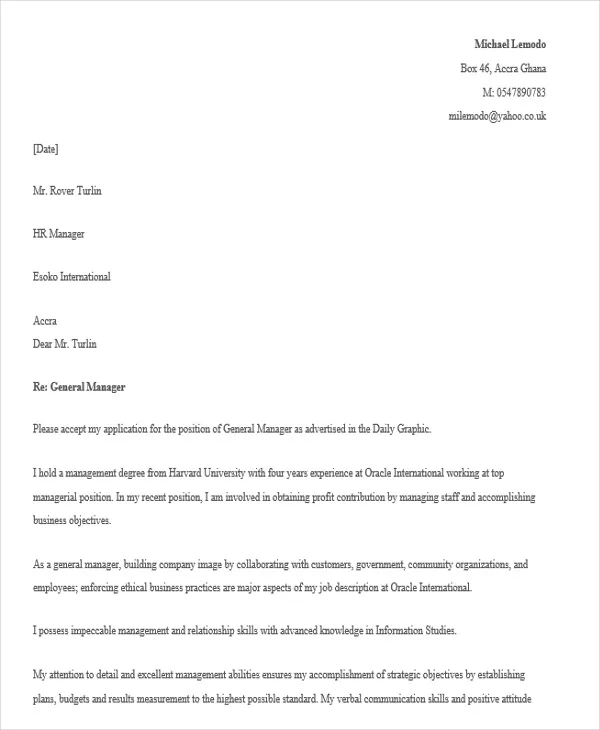
Understanding the Purpose of a Management Cover Letter
A management cover letter is a crucial document in your job application. It serves as your initial introduction to a potential employer, offering a glimpse into your professional background, skills, and personality. Unlike a resume, which is a factual summary of your experience, the cover letter provides an opportunity to express your interest in the specific role and highlight why you’re the perfect fit. Crafting a compelling cover letter is essential for making a strong first impression and increasing your chances of landing an interview.
What is a Management Cover Letter?
A management cover letter is a one-to-two-page document accompanying your resume when applying for a management position. Its primary goal is to articulate your qualifications, enthusiasm, and suitability for the role. This letter goes beyond simply listing your experiences; it demonstrates your understanding of the company, the role’s requirements, and how you can contribute to their success. A well-written cover letter should be tailored to each specific job application, showcasing your unique strengths and aligning them with the employer’s needs.
Why is a Cover Letter Necessary?

While a resume provides a snapshot of your professional history, a cover letter allows you to provide context, personality, and a compelling narrative. It helps the hiring manager understand your motivations, career goals, and how your skills align with the company’s vision. In the competitive field of management, a strong cover letter can distinguish you from other candidates. It provides an opportunity to elaborate on key achievements, demonstrate your leadership qualities, and show your genuine interest in the position and the organization. Ignoring the cover letter is a missed opportunity to impress.
Key Components of a Management Cover Letter
Header and Contact Information
Start with a professional header that includes your name, contact information (phone number, email address, and LinkedIn profile URL if applicable), and the date. This ensures the hiring manager can easily reach you. Ensure your contact information is up-to-date and accurate. Consider using a clean and easy-to-read font, such as Arial or Calibri. For a polished look, align your header to the left or right, maintaining a consistent format throughout the document.

Addressing the Hiring Manager

Whenever possible, address your cover letter to a specific person (e.g., ‘Dear Mr. Smith’ or ‘Dear Ms. Jones’). Researching the hiring manager’s name demonstrates initiative and personalizes your application. If you cannot find a name, use a professional greeting like ‘Dear Hiring Manager.’ Avoid generic salutations like ‘To Whom It May Concern.’ Addressing the right person shows you’ve taken the time to learn about the company and the role, increasing your chances of making a positive impression.
Opening Paragraph
Your opening paragraph is your hook. It should immediately capture the hiring manager’s attention and clearly state the position you’re applying for and where you saw the job posting. Briefly express your enthusiasm for the role and the company. Consider including a compelling statement about your most relevant skill or experience to pique their interest further. Make it concise, enthusiastic, and tailored to the specific job. Avoid generic opening lines and instead focus on demonstrating your genuine interest.
Highlighting Your Skills and Experience
The body of your cover letter is where you showcase your skills and experience. Tailor this section to match the job description, highlighting the most relevant qualifications. Explain how your past experiences have prepared you for this specific management role. Provide specific examples of your accomplishments, quantifying them whenever possible. Use keywords from the job description to ensure your application aligns with their requirements. Show, don’t just tell, and provide evidence of your capabilities. For example: if the job requires skills in team leadership, you can mention managing teams and projects successfully.

Quantifying Achievements

Whenever possible, quantify your achievements with numbers and data. This adds credibility and demonstrates the impact of your work. Instead of saying ‘Managed a team,’ say ‘Managed a team of 15 employees, increasing productivity by 15%.’ Using numbers makes your accomplishments more tangible and memorable. Include metrics such as revenue growth, cost savings, or improvements in key performance indicators (KPIs). This allows the hiring manager to quickly assess your impact. For example, indicate revenue generated through project.

Using Action Verbs
Start your bullet points and descriptions with strong action verbs. Examples include ‘Led,’ ‘Managed,’ ‘Developed,’ ‘Implemented,’ ‘Achieved,’ and ‘Improved.’ Action verbs immediately convey your contributions and responsibilities. Avoid passive language and focus on highlighting your proactive involvement. Action verbs add energy to your writing and make it easier for the reader to understand your accomplishments. This makes the letter dynamic and shows your experience. For example, instead of ‘Was responsible for project management,’ use ‘Managed projects.’ Using action verbs helps you stand out.
Demonstrating Leadership Qualities
For a management role, demonstrating leadership qualities is crucial. Provide specific examples of how you’ve led teams, motivated employees, and resolved conflicts. Highlight your ability to make strategic decisions, delegate tasks effectively, and foster a positive work environment. Mention any training, certifications, or experiences that demonstrate your leadership skills. Show your commitment to developing team members and driving results. Give examples of your ability to make strategic decisions, and motivate team members.

Closing Paragraph

Your closing paragraph should reiterate your interest in the position and the company. Summarize your key qualifications and reiterate your enthusiasm. Express your gratitude for the reader’s time and consideration. Keep it concise and professional. Reiterate your value. Always end on a positive and confident note, showing your eagerness to take the next step in the hiring process.
Call to Action
Include a clear call to action. State your availability for an interview and how the hiring manager should contact you (e.g., ‘I am available for an interview and can be reached at [phone number] or [email address].’ or ‘I welcome the opportunity to discuss how my skills and experience can benefit your team. I can be reached at…’). Make it easy for the hiring manager to take the next step. End the cover letter with a professional closing, such as ‘Sincerely’ or ‘Best regards,’ followed by your name.
Proofreading and Formatting
Formatting Tips

Formatting plays a critical role in the overall impression of your cover letter. Use a professional font (e.g., Arial, Calibri, or Times New Roman) and maintain consistent font sizes throughout the document. Use clear headings and subheadings to make your letter easy to read. Keep paragraphs concise and to the point, with a maximum of five to six sentences. Use bullet points to highlight key skills, experiences, and achievements. Ensure your cover letter is visually appealing and well-organized, making it easy for the hiring manager to quickly grasp your key qualifications.

Proofreading Checklist
Thoroughly proofread your cover letter before submitting it. Check for spelling errors, grammatical mistakes, and punctuation errors. Ensure the formatting is consistent and professional. Read your cover letter aloud to catch any awkward phrasing or unclear sentences. Have a friend or colleague review your cover letter for a fresh perspective. Correcting errors shows attention to detail and professionalism. Proofreading is crucial to ensure the letter effectively represents your expertise and attention to detail. Common mistakes include incorrectly using ’there’, ’their’, and ’they’re’. Mistakes are unprofessional and create a bad impression.
Examples of Strong Management Cover Letters
Example 1: Project Management

A strong cover letter for a project management position highlights relevant project management experience. It should demonstrate how you have successfully planned, executed, and delivered projects on time and within budget. It should showcase strong organizational and leadership skills. The letter would showcase how you’ve led teams, managed resources, and mitigated risks. Include examples of successful projects and the positive outcomes you achieved. The format should include a professional header with all contact information. The greeting should be ‘Dear Mr. or Ms. …’ and the closing ‘Sincerely’. The letter should show how your goals align with the company’s goals.
Example 2: Team Leadership
A cover letter for a team leadership role should highlight your ability to motivate, mentor, and manage a team. Describe your leadership style and provide examples of how you have improved team performance, increased employee engagement, and resolved conflicts. Focus on your communication skills, your ability to delegate tasks, and your proficiency in fostering a collaborative work environment. This should also show your vision and enthusiasm for leading teams and driving results. The letter should include what your leadership style is. Also, highlight the results of your leadership efforts. Use action verbs for the body of the letter.
Common Mistakes to Avoid
Generic Cover Letters

Avoid sending a generic cover letter that is not tailored to the specific job and company. Generic cover letters often lack the personalization needed to capture the hiring manager’s attention. They show that the applicant didn’t invest time in researching the company or understanding the job requirements. Use each letter to showcase your unique understanding and interest in the specific role. Tailor the letter to show the hiring manager your understanding of their needs and how you can meet them. Show what unique skills you have.
Typos and Grammatical Errors
Typos and grammatical errors can severely damage your credibility and create a negative impression. They suggest a lack of attention to detail and professionalism. Before submitting your cover letter, proofread it multiple times. Read the document aloud to catch any awkward phrasing or unclear sentences. Also, ask a friend or colleague to review your letter. Using grammar and spell-check tools is also recommended. These can improve your chances of making a positive impression.
Ignoring the Job Description
Failing to address the job description’s requirements is a significant mistake. Your cover letter should directly respond to the skills, experiences, and qualifications listed in the job description. Tailor your content to showcase how your qualifications match the employer’s needs. Highlight the relevant keywords and use examples to demonstrate your skills. The cover letter should be a document that serves the needs of the company, and addressing the job description is critical to show the value you can bring. Tailor the letter to the company’s needs and the specific role. Use keywords from the description.
Tips for Tailoring Your Cover Letter
Researching the Company
Before writing your cover letter, research the company. Learn about their mission, values, products or services, and recent achievements. This information will help you tailor your letter to show how your skills and experience align with their needs. Use their website, social media profiles, and press releases to gain insights. Mention specific company initiatives or goals in your letter. This will demonstrate that you are interested in the company. Mentioning the company shows that you know the company’s goals.
Matching Skills to Requirements
Carefully review the job description and identify the required skills, experiences, and qualifications. Then, highlight your relevant skills in your cover letter and provide specific examples. Use keywords from the job description to ensure your application is aligned with their needs. For each key requirement, explain how your past experiences demonstrate your capability. Be specific, providing measurable results and quantify your achievements whenever possible. The letter shows what you can do and how you will contribute. Make sure your skills match with the job requirements.

Showcasing Your Personality
While maintaining a professional tone, let your personality shine through. Your cover letter should be a reflection of who you are. Demonstrate your passion for the role and the company. Use a professional, enthusiastic tone to express your personality. Include a brief anecdote to highlight your relevant skills or leadership qualities. Injecting personality helps you stand out and makes the hiring manager remember you. Focus on the key points for each job. The letter should be professional, but express your personality.
Finalizing and Submitting Your Cover Letter
Saving in the Correct Format
Save your cover letter in the appropriate format, typically as a PDF. This ensures that the formatting remains consistent across different devices. The PDF format also prevents any potential compatibility issues. It also makes sure the letter appears the same on any device. Always name the file clearly, including your name and the job title (e.g., ‘JohnDoe_ManagementCoverLetter’). Avoid using spaces or special characters in the file name. Properly formatting the letter makes you look professional.

Submitting Through the Proper Channels
Follow the employer’s instructions for submitting your cover letter and resume. If they specify an online application system, use that. If they ask for email, follow their instructions. Ensure that you include all required documents and that they are correctly named. Double-check that you are applying for the right position. Also, make sure to check the details. If you meet all the requirements for the job, you have a good chance of getting hired. Submitting through the proper channels ensures your application is received. A good cover letter helps you be considered for the role.