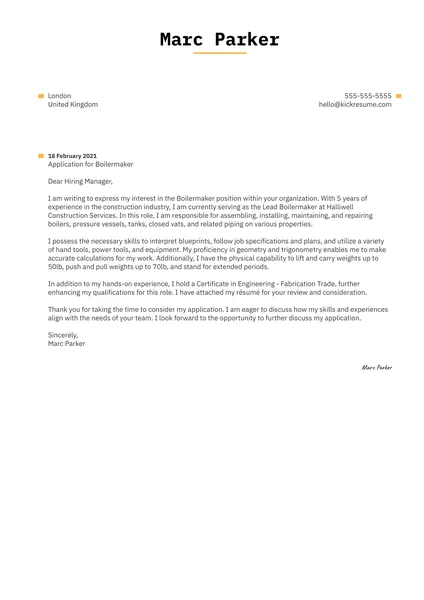
A manufacturing cover letter is your first introduction to a potential employer. It is a critical document that can significantly influence your chances of landing an interview. Crafting a compelling cover letter requires careful attention to detail, showcasing your skills, and highlighting your accomplishments in a way that aligns with the specific job requirements. This guide provides a comprehensive approach to creating an effective manufacturing cover letter that helps you get hired.
Key Elements of a Manufacturing Cover Letter
A well-structured manufacturing cover letter contains several key elements. Each section serves a specific purpose in communicating your qualifications and enthusiasm for the role. By including these elements, you create a professional and persuasive document that captures the hiring manager’s attention. The following sections provide insights into the vital components of an effective cover letter.
Contact Information Section
Applicant’s Name and Contact Details

Begin with your full name, address, phone number, and professional email address. This information should be clearly displayed at the top of the document. Ensure your email address is professional and easily readable. Double-check the accuracy of all contact details to avoid any communication issues. This ensures the employer can easily reach you.
Date and Recipient Information
Include the date the cover letter is written, followed by the hiring manager’s name, title, and the company’s address. If the hiring manager’s name isn’t available, use the title of the person responsible for hiring, or a general greeting like ‘Dear Hiring Manager.’ This demonstrates that you have researched the company and are addressing the letter to the appropriate person, which is a great first impression.
Professional Summary
The professional summary acts as an elevator pitch, summarizing your key skills and experiences relevant to the manufacturing position. It should be concise, compelling, and tailored to the job description. Highlight your most significant achievements and qualifications in this section to capture the reader’s interest.
Highlighting Relevant Skills

Identify and list the skills that align with the job requirements. These may include technical skills (e.g., CNC operation, CAD design), soft skills (e.g., problem-solving, teamwork), and any certifications. Provide examples of how you have utilized these skills to achieve positive outcomes in previous roles. Use keywords from the job description to make your application more relevant and visible to applicant tracking systems.
Quantifying Accomplishments
Use numbers and data to quantify your accomplishments. Instead of saying “Improved efficiency”, state “Improved production efficiency by 15%”. This provides concrete evidence of your capabilities and demonstrates your impact in previous roles. Quantifiable achievements make your cover letter more persuasive and credible, showcasing your value to the employer.
Body of the Cover Letter
The body of your manufacturing cover letter should expand on the information provided in the summary, providing more detailed examples and context. Use a structured approach, with distinct paragraphs that each serve a specific purpose.
Opening Paragraph

Expressing Interest and Identifying the Role
Start by clearly stating the position you are applying for and where you found the job posting. Express your enthusiasm for the opportunity and briefly explain why you are interested in the company and the specific role. This opening sets the tone and immediately grabs the reader’s attention, creating a positive first impression. Mentioning where you saw the job posting can also help to show attention to detail.
Middle Paragraphs
The middle paragraphs should provide detailed examples of your skills and experience. Show how your qualifications align with the job requirements. Use the STAR method (Situation, Task, Action, Result) to structure your examples, providing clear and concise narratives that showcase your abilities.
Showcasing Skills & Experience

Provide specific examples of how you have used your skills in previous roles. Detail the challenges you faced, the actions you took, and the positive outcomes you achieved. Focus on experiences that demonstrate your ability to perform the tasks required in the job description. This gives potential employers a clear picture of how you will perform in their company. Refer to the skills mentioned in your professional summary.
Tailoring to the Job Description
Carefully review the job description and tailor your cover letter to match the specific requirements. Highlight the skills and experiences that are most relevant to the position. Use keywords from the job description to demonstrate your understanding of the role. This will show that you have read and understood the requirements, which is a great start.
Closing Paragraph
Expressing Enthusiasm and Call to Action

Reiterate your interest in the position and thank the reader for their time and consideration. End with a clear call to action, such as stating your availability for an interview or indicating that you look forward to hearing from them. Make sure to include your contact information again at the end for easy access.
Formatting and Presentation
The appearance of your manufacturing cover letter is just as important as the content. A well-formatted letter is easier to read and makes a positive impression. Pay attention to details such as font, spacing, and overall layout.
Font, Spacing, and Overall Appearance
Choose a professional, easy-to-read font such as Times New Roman, Arial, or Calibri. Use a font size of 11 or 12 points. Maintain consistent spacing throughout the document, with single spacing within paragraphs and a double space between paragraphs. Ensure your cover letter has clean margins and a professional layout, avoiding excessive use of bolding or italics. Proper formatting shows attention to detail and professionalism.
Proofreading and Editing

Thoroughly proofread and edit your cover letter before submitting it. Check for any grammatical errors, spelling mistakes, and typos. Ask a friend or family member to review your letter for a fresh perspective. Errors can significantly detract from your credibility and reduce your chances of getting the job. Proofreading is a must to ensure your professional image. Review again after edits for even more accuracy.
Addressing Specific Hiring Manager Requirements
Many companies and hiring managers have specific requirements or preferences for cover letters. Paying attention to these details will help you stand out. It is essential that you tailor the cover letter for each application, paying close attention to all of the requirements.
Researching the Company
Before writing your cover letter, research the company and the specific role. Understand their values, mission, and recent projects. Tailor your cover letter to demonstrate how your skills and experience align with the company’s goals. Mentioning specific projects or achievements can show you have an interest in the company. Use their website, LinkedIn, and other resources to gain insights.
Customizing for Each Application
Avoid using a generic cover letter. Customize your letter for each application, highlighting the skills and experiences most relevant to the specific job. This shows that you have taken the time to understand the role and are genuinely interested in the opportunity. Tailoring your cover letter can significantly increase your chances of getting an interview, making it an investment worth the time.
Following Instructions Carefully
Carefully read and follow all instructions provided in the job posting. If the posting asks for a specific format or requires certain information, make sure to include it in your cover letter. Attention to detail is crucial, and following instructions demonstrates your ability to adhere to company protocols and expectations.
In conclusion, a well-crafted manufacturing cover letter is a crucial tool in your job search. By focusing on the key elements, formatting, and tailoring your letter to each job application, you can significantly increase your chances of getting hired. Remember to highlight your skills, quantify your accomplishments, and express your enthusiasm for the role and the company. By following these guidelines, you can create a cover letter that showcases your qualifications and helps you land your dream job in the manufacturing industry.