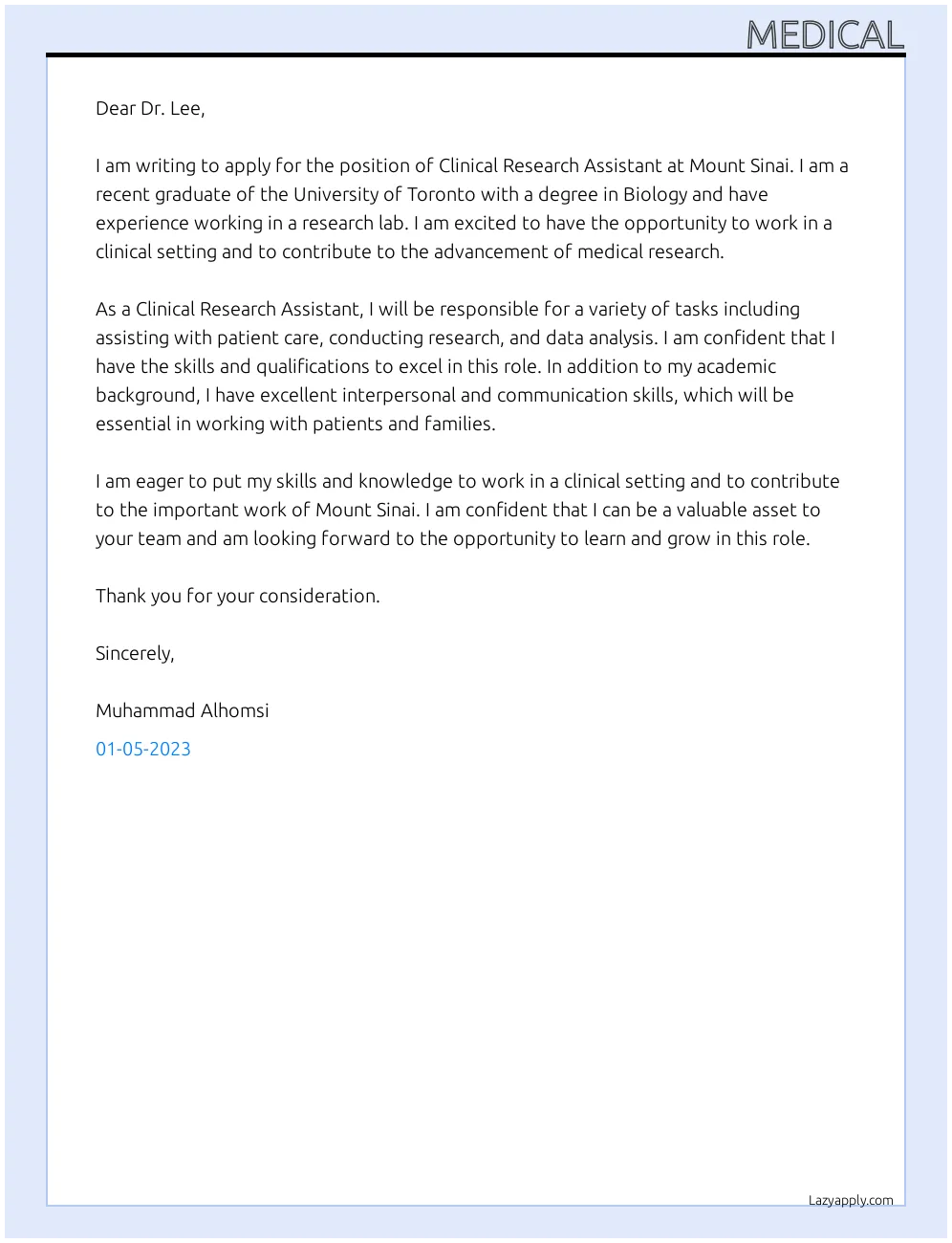
What is a Medical Job Cover Letter?
A medical job cover letter is a crucial document that accompanies your resume when applying for positions in the healthcare field. It serves as your first introduction to a potential employer, providing an opportunity to highlight your qualifications, skills, and experience. More than just a formality, it’s a chance to personalize your application and demonstrate your genuine interest in the specific role and the organization. A well-crafted cover letter can significantly increase your chances of getting noticed and securing an interview, setting you apart from other candidates. It’s your opportunity to showcase your unique value proposition and explain why you’re the ideal fit for the position.
Why is a Medical Job Cover Letter Important?
In the competitive world of healthcare, a medical job cover letter is more than just an optional extra; it’s a necessity. It gives you the space to connect your skills and experiences to the specific requirements of the job posting, something a resume alone often can’t do. Healthcare employers often look for individuals who not only possess the necessary technical skills but also demonstrate strong interpersonal abilities, compassion, and a commitment to patient care. A cover letter allows you to express these qualities, share your career aspirations, and illustrate why you’re passionate about working in the medical field. It showcases your communication skills and attention to detail – crucial attributes for any healthcare professional. Without a compelling cover letter, your application might get overlooked.
Key Components of a Medical Job Cover Letter

A well-structured medical job cover letter typically includes several key components that work together to present a compelling case for your candidacy. From the header to the closing, each section plays a vital role in conveying your professionalism, skills, and suitability for the role. Understanding these components and how to tailor them to each application is essential for crafting an effective cover letter. The following sections will outline each of these components to help you build a strong and impressive cover letter that will grab the attention of the hiring manager.
Header & Contact Information
The header of your medical job cover letter sets the tone for professionalism and provides the necessary contact information. Include your full name, address, phone number, and professional email address. Make sure this information is accurate and up-to-date. Also, include the date and the hiring manager’s name and title, if available. If you don’t know the hiring manager’s name, use the title of the person you will be reporting to or the department head. The header should be clean, organized, and easy to read, ensuring the employer can quickly find your contact details and know to whom the letter is addressed.
Personalized Salutation
A personalized salutation is crucial for making a good first impression. Avoid generic greetings like “To Whom It May Concern.” Instead, research the hiring manager’s name and use “Dear Mr./Ms. [Last Name]”. If you’re unable to find a specific name, a professional greeting such as “Dear Hiring Manager” is acceptable, but always strive for personalization. This demonstrates that you’ve taken the time to learn about the organization and are genuinely interested in the opportunity. A personalized salutation immediately captures the reader’s attention and shows that you’re making an effort to connect with them, which sets you apart from other applicants.
Opening Paragraph — Grab Attention

The opening paragraph of your medical job cover letter is your chance to make a strong first impression. Start with a brief, engaging statement that captures the reader’s attention. Clearly state the position you’re applying for and how you learned about it. Briefly mention why you’re excited about the opportunity and the organization. This sets the stage for the rest of your letter and encourages the reader to continue. For instance, you might start by expressing your enthusiasm for a specific program or aspect of the hospital or clinic. Show genuine interest, and make it clear why this job resonates with your career goals.
Body Paragraphs — Showcase Your Skills
The body paragraphs are the core of your cover letter, where you showcase your skills, experience, and qualifications. Tailor these paragraphs to the specific requirements outlined in the job description. Don’t just list your skills; provide specific examples of how you’ve applied them in the past. Use the STAR method (Situation, Task, Action, Result) to describe your accomplishments, highlighting your contributions and the positive outcomes you achieved. This section is your opportunity to convince the employer that your abilities align with their needs, demonstrating your value. It’s vital to make a connection between your experiences and what the employer is looking for.
Highlight Relevant Experience
Focus on the experiences most relevant to the job you’re applying for. For instance, if you’re applying for a nursing position, highlight experiences where you provided direct patient care, managed medications, or coordinated care plans. If the job requires expertise in a specific area, such as cardiology or pediatrics, make sure to emphasize your related experience and training. Use clear and concise language to describe your responsibilities, achievements, and the impact you made in your previous roles. Tailor your examples to the job requirements and skills they emphasize in the job description. This will show the hiring manager how you would be a good fit.
Quantify Achievements

Whenever possible, quantify your achievements to demonstrate your impact. Use numbers and data to back up your claims, providing concrete evidence of your successes. For example, instead of saying “Improved patient satisfaction,” you could say “Increased patient satisfaction scores by 15% within six months through implementing a new communication protocol.” Quantifying your achievements gives the employer a clear understanding of your capabilities and the value you can bring to their organization. Metrics and numbers make your accomplishments more compelling and provide tangible proof of your skills and experience. Ensure that the results are relevant to the job.
Showcase Soft Skills
While technical skills are crucial in healthcare, soft skills such as communication, teamwork, empathy, and problem-solving are equally important. In your cover letter, highlight these skills by providing examples of how you’ve demonstrated them in past roles. For instance, describe a situation where you successfully resolved a conflict, collaborated with a team to achieve a goal, or communicated complex medical information to patients in a clear and empathetic manner. Showing these qualities demonstrates that you are a well-rounded professional who can contribute positively to the workplace. It is a good way to show that you’re a good team player, and can handle difficult situations.
Closing Paragraph — Call to Action
The closing paragraph should reiterate your interest in the position and summarize your key qualifications. Reiterate why you are a good fit for the role and what you can bring to the organization. End with a clear call to action, such as requesting an interview or expressing your willingness to discuss your qualifications further. Keep it concise, professional, and enthusiastic, encouraging the hiring manager to take the next step. Avoid simply restating your qualifications; instead, emphasize what you can offer to the employer and how you can contribute to their mission and goals. The last paragraph should leave a lasting positive impression.
Express Enthusiasm

Show genuine enthusiasm for the opportunity and the organization in your closing paragraph. Demonstrate your excitement about the prospect of joining their team and contributing to their mission. This is your chance to convey your passion for healthcare and your commitment to providing excellent patient care. This enthusiasm should be apparent in your tone and choice of words. Expressing your genuine interest will help you stand out from other applicants and make a memorable impression. This also provides the reader with a good impression of your character.
Include a Strong Call to Action
End your cover letter with a strong call to action, explicitly stating your desire for an interview. Make it easy for the hiring manager to move forward with your application. Include a statement such as, “I am eager to discuss how my skills and experience can benefit your team and am available for an interview at your earliest convenience.” You can also express your willingness to provide additional information or references. Make it clear that you are proactive and ready to take the next step in the hiring process, ensuring that the reader knows how to contact you.
Formatting & Proofreading
Formatting and proofreading are essential for creating a professional and polished medical job cover letter. A well-formatted letter is easy to read and demonstrates your attention to detail. Errors in grammar, spelling, or formatting can undermine your credibility and suggest a lack of professionalism. Before submitting your cover letter, always review it carefully for any mistakes. A clean, error-free document leaves a positive impression, increasing your chances of getting noticed by the hiring manager.
Font and Layout Guidelines

Use a professional, easy-to-read font, such as Times New Roman, Arial, or Calibri, with a font size between 10 and 12 points. Ensure consistent formatting throughout the letter, including spacing, margins, and alignment. Use single spacing within paragraphs and double spacing between paragraphs. Maintain 1-inch margins on all sides of the document. The layout should be clean, well-organized, and visually appealing, making it easy for the hiring manager to read and comprehend the information. Consider using bullet points to highlight key skills or accomplishments and separate your letter into clear sections to make it easy to scan. Remember, the goal is to present a clean, professional document.
Proofreading for Errors
Proofreading is a critical step in ensuring your medical job cover letter is free of errors. Carefully review your letter for any typos, grammatical errors, and spelling mistakes. Read the document multiple times, and consider reading it aloud to catch any errors you might miss. Use a grammar checker and spell-checker, but don’t rely on them completely. Have someone else proofread your letter, as a fresh pair of eyes can often identify errors you may have missed. Ensure that your contact information is accurate. Before submitting your cover letter, always double-check everything. A polished, error-free document showcases your professionalism and attention to detail.
Medical Job Cover Letter Examples
Reviewing medical job cover letter examples can provide valuable insights into how to structure and write your own letter. Use these examples as inspiration, adapting them to your specific skills, experience, and the job you are applying for. Pay attention to the language used, how the applicants highlight their qualifications, and the overall tone of the letters. Look for examples that are relevant to your profession or the type of role you seek, such as physician, nurse, or medical assistant. Tailor the examples to the specific requirements outlined in the job description. Modify the examples to reflect your unique skills and experiences, and make sure it aligns with the job posting.
Cover Letter Templates

Cover letter templates can save you time and provide a structured format for your letter. Numerous templates are available online that you can customize to fit your needs. Choose a template that matches your profession and the job you’re applying for. Adapt the template to reflect your skills, experience, and the specific requirements of the job. Customize the sections to highlight your unique qualifications and achievements. Keep in mind that templates should be a starting point, not a rigid framework. Always personalize the content and make sure your cover letter stands out. This approach helps you create a professional and compelling letter without having to start from scratch.
Tips for Different Medical Roles
Tailoring your medical job cover letter to the specific role you are applying for is crucial. The approach for a physician will vary significantly from that of a nurse or medical assistant. Each role requires different skills and experiences, and your cover letter should reflect that. Research the requirements of each position and focus on the most relevant aspects of your background. This demonstrates that you understand the role and are a good fit for the job. Also, tailor the content to match the specific job posting; this will ensure that you highlight the skills and experiences most valued by the employer.
For Physicians
Physician cover letters should emphasize your medical training, specializations, certifications, and experience. Highlight your accomplishments in patient care, research, and leadership roles. Focus on the skills and experiences relevant to the specific position. Demonstrate your ability to work in a team and communicate with patients and colleagues. You should showcase any unique skills or specializations, such as expertise in a specific medical field or experience with innovative technologies. Your cover letter needs to showcase that you’re not only skilled but also dedicated to providing excellent patient care. Make sure you tailor the letter to the job.
For Nurses

Nurse cover letters should emphasize your clinical skills, experience with patient care, and any specializations or certifications. Highlight your ability to provide compassionate care, manage patient medications, and work effectively within a healthcare team. Focus on your experience with electronic health records (EHRs), patient education, and adherence to safety protocols. You should mention any specialties, such as critical care, surgical nursing, or emergency room experience. Your cover letter should show you’re a caring professional who is committed to patient safety and well-being. Always make sure your skills and experiences match the job description.
For Medical Assistants
Medical assistant cover letters should highlight your clinical and administrative skills, patient interaction experience, and knowledge of medical procedures. Detail your experience with taking patient histories, assisting with examinations, and performing basic laboratory tests. Show your proficiency with electronic health records (EHRs), scheduling appointments, and managing patient communication. Highlight your ability to provide excellent patient care and maintain a professional, organized environment. Mention any special certifications, such as Certified Medical Assistant (CMA) or Registered Medical Assistant (RMA). Your cover letter needs to showcase your knowledge of medical terminology and your dedication to supporting healthcare professionals.
Common Mistakes to Avoid
Avoid common mistakes in your medical job cover letter to ensure it creates a positive impression. These errors can undermine your credibility and reduce your chances of being considered for the role. By understanding these pitfalls and taking steps to avoid them, you can create a professional, compelling letter that stands out. Always take your time to write it. Here are some of the most common pitfalls.
Generic Content
Avoid using generic, one-size-fits-all content in your medical job cover letter. Tailor your letter to each job you apply for, highlighting the specific skills and experiences that align with the job requirements. Avoid using phrases that can be applied to any job. Instead, mention how your experience directly addresses the needs of the employer. Generic letters show a lack of effort and interest, and they do not impress the hiring manager. Always make sure you customize the letter to show you put the effort in to do your research and know the needs of the company you are applying to.
Typos and Grammatical Errors
Typos and grammatical errors can damage your credibility and demonstrate a lack of attention to detail. Always proofread your letter carefully, and consider having someone else review it. Use grammar and spell-check tools, but don’t rely on them completely. Take the time to create a polished, error-free document to show that you are a professional. Typos can easily make the hiring manager believe you are not meticulous. Take the time to avoid these pitfalls.
Ignoring Job Requirements
Ignoring the job requirements is a critical mistake that can get your application rejected. Read the job description carefully and tailor your letter to address the specific skills, experience, and qualifications listed. Don’t assume that the employer knows what you are capable of; your cover letter should clearly demonstrate how your background aligns with their needs. Highlighting the exact keywords and skills that the job posting mentions will show that you pay attention to detail. This shows that you have what the company is looking for.
Conclusion
A well-crafted medical job cover letter is a powerful tool that can significantly enhance your chances of securing a job in the healthcare field. By following the guidelines outlined in this guide, you can create a compelling letter that highlights your skills, experience, and passion for the profession. Focus on personalization, attention to detail, and a clear call to action to stand out from other applicants. Remember to tailor your letter to each job and the specific requirements. Use the cover letter to make a great first impression. Good luck on your job search!