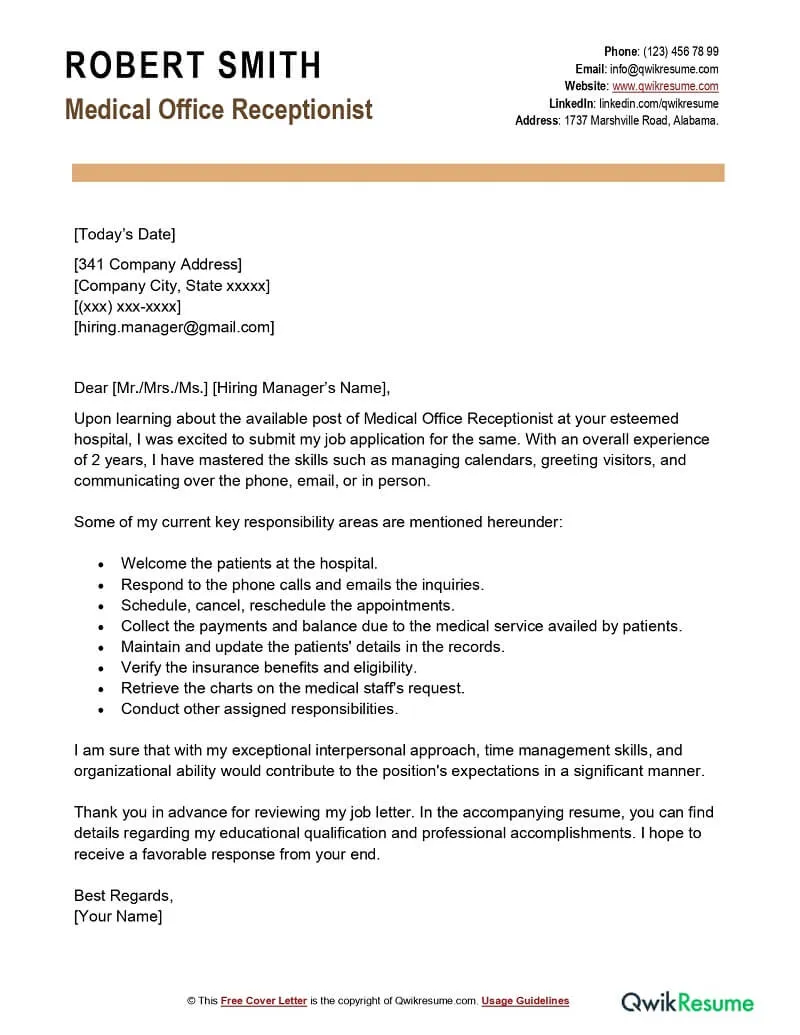
Crafting a Compelling Medical Receptionist Cover Letter
A well-written cover letter is your first opportunity to make a positive impression on a potential employer. For a medical receptionist position, it’s crucial to highlight your relevant skills, experience, and personality traits that align with the specific requirements of the job. Your cover letter isn’t just a formality; it’s a marketing tool that sells your abilities and demonstrates why you are the ideal candidate. It provides a platform to elaborate on your resume, showcase your communication skills, and express your genuine interest in the role. By following these tips, you can create a cover letter that stands out from the competition and increases your chances of securing an interview.
Highlighting Relevant Skills
When writing your cover letter, focus on the skills that are most important for a medical receptionist. These typically include excellent communication skills (both written and verbal), strong organizational abilities, proficiency in using medical software (like Electronic Health Records systems), a professional demeanor, and the ability to handle patient inquiries with empathy and efficiency. If you are fluent in multiple languages, be sure to include it in this section. Providing concrete examples of how you’ve used these skills in previous roles is even more effective. For instance, you can describe a time when you successfully managed a busy reception area, resolved patient complaints, or trained new staff members on office procedures. Remember to tailor the skills you mention to the specific requirements listed in the job description.
Emphasizing Experience

Your experience is a key factor that employers consider. Whether you have extensive experience or you are just starting out, use your cover letter to showcase your previous roles and the responsibilities you held. Briefly describe your previous positions and highlight your accomplishments. Don’t just list your duties; provide specific examples of how you improved processes, handled difficult situations, or contributed to a positive patient experience. Quantify your achievements whenever possible. For instance, you might mention how you reduced wait times or improved patient satisfaction scores. If you are new to the field, consider highlighting any transferable skills from other jobs, like customer service, administrative support, or data entry. Also, mention any internships, volunteer work, or relevant training programs you have completed.
Showcasing Your Personality
Medical receptionists often play a vital role in creating a welcoming and supportive environment for patients. Use your cover letter to demonstrate your personality and how it aligns with the role. Show your compassion, patience, and ability to connect with people from various backgrounds. You might describe your customer service philosophy or share an anecdote that illustrates your empathy and ability to put patients at ease. Mention your enthusiasm for the healthcare industry and your commitment to providing excellent patient care. Your personality can significantly impact the hiring decision, so make sure to let it shine through your writing. Be authentic and let your passion for the job come through.
Tailoring Your Letter to the Job
One of the most effective ways to impress a potential employer is to customize your cover letter for each job application. Carefully read the job description and identify the specific requirements and qualifications. Then, make sure to tailor your cover letter to address these requirements. Highlight the skills and experiences that are most relevant to the position and use the same keywords from the job description. Demonstrate that you understand the needs of the practice and are the right fit for their team. This shows that you have taken the time to research the role and are genuinely interested in working for them. By tailoring your letter, you significantly increase your chances of capturing the employer’s attention and landing an interview.
Proofreading and Formatting

Before submitting your cover letter, it’s essential to proofread it carefully. Errors in grammar, spelling, or punctuation can make a negative impression and damage your credibility. Take the time to check your letter for accuracy and clarity. Use a clear and professional format. Choose a simple, easy-to-read font and use consistent spacing and margins. Consider asking a friend, family member, or career counselor to review your letter for any mistakes. Ensure your contact information is correct and up-to-date. A well-formatted and error-free cover letter demonstrates your attention to detail and professionalism, which are vital qualities for a medical receptionist.
Key Elements to Include in Your Cover Letter
Contact Information and Salutation
At the top of your cover letter, include your full name, address, phone number, and email address. Make sure these are accurate and easy to find. Always address your cover letter to the hiring manager or the person specified in the job posting. If you cannot find a specific name, use a professional salutation like “Dear Hiring Manager” or “Dear [Practice Name] Team.” Avoid generic greetings like “To Whom It May Concern.” A personalized salutation shows that you have taken the time to research the practice and are serious about the role.
Opening Paragraph Grab Their Attention

The opening paragraph is your first opportunity to make a strong impression. Start with a concise and engaging statement that clearly states the position you are applying for and where you saw the job posting. Briefly highlight your most relevant skills and experience, and express your enthusiasm for the opportunity. This is the section to capture the reader’s interest and encourage them to continue reading. Avoid generic opening lines and instead focus on a unique aspect of your skills or a specific achievement that demonstrates your value.
Body Paragraphs Showcase Achievements
The body paragraphs are where you provide details about your skills, experience, and achievements. Provide specific examples of your accomplishments, using the STAR method (Situation, Task, Action, Result) to provide context and highlight your impact. For example, describe a difficult situation you faced, the task you were assigned, the actions you took to resolve it, and the positive results you achieved. Quantify your achievements whenever possible, such as the number of patients you assisted or the efficiency improvements you implemented. Make sure to address the key requirements mentioned in the job description and explain how your skills and experiences align with them.
Closing Paragraph Call to Action
In the closing paragraph, restate your interest in the position and thank the hiring manager for their time and consideration. Express your availability for an interview and include a clear call to action. For example, you might say, “I am eager to discuss my qualifications further and am available for an interview at your earliest convenience.” or “I look forward to hearing from you soon.” It’s always advisable to reiterate your enthusiasm for the role and express confidence in your ability to contribute to the practice. End with a professional closing like “Sincerely” or “Best regards,” followed by your full name.
Common Mistakes to Avoid

Generic Language
Avoid using generic, vague language that could apply to any job or candidate. Instead of saying, “I am a hard worker,” provide specific examples of your hard work and the results you achieved. Tailor your language to the specific requirements of the job. Use keywords from the job description and avoid clichés and overly used phrases. Focus on showcasing your unique skills, experiences, and personality to make your cover letter stand out from the competition.
Typos and Grammatical Errors
Typos and grammatical errors are unacceptable in a professional cover letter. They can create a negative impression and undermine your credibility. Proofread your letter carefully before submitting it. Use a spell checker and grammar checker, but don’t rely on them completely. Read your letter aloud to catch any errors that may have been missed. Consider having a friend or career counselor review your letter for accuracy and clarity. A well-written and error-free cover letter demonstrates your attention to detail and professionalism.
Lack of Enthusiasm

Your cover letter should convey enthusiasm and excitement for the medical receptionist position and the practice. Avoid sounding indifferent or uninspired. Show genuine interest in the opportunity by highlighting the aspects of the role that appeal to you. Mention what attracts you to the specific practice. Research the practice and mention any values or initiatives that resonate with you. Show your personality and passion for providing excellent patient care. If you are excited about the role, the hiring manager will be more likely to share your enthusiasm.
Ignoring Job Requirements
Carefully review the job description and address all the requirements in your cover letter. If the job posting emphasizes specific skills or experiences, make sure to highlight how you possess those qualifications. Tailor your cover letter to match the requirements of the role. Do not submit a generic cover letter that doesn’t speak directly to the specific needs of the practice. Ignoring job requirements demonstrates a lack of attention to detail and reduces your chances of being considered for the position.
Finalizing and Submitting Your Cover Letter
Formatting Your Cover Letter

Use a professional and easy-to-read format for your cover letter. Choose a clean font like Arial, Calibri, or Times New Roman. Use a font size between 10 and 12 points. Keep the margins at around 1 inch. Use single-spacing for the body of the letter and double-spacing between paragraphs. Ensure your cover letter is well-organized and easy to follow. Consider using bullet points to highlight your key skills or achievements. Save your cover letter as a PDF file to preserve the formatting when you submit it.
Submitting Your Application
Follow the instructions provided in the job posting for submitting your application. Always include both your cover letter and resume, unless otherwise specified. If the posting asks for a specific file format or name, follow these instructions carefully. Before submitting, double-check your contact information and ensure you have included all the necessary documents. After submitting, keep a copy of your application for your records. Be patient and allow the employer time to review your application. If you haven’t heard back within the timeframe specified in the job posting, you might consider sending a polite follow-up email to express your interest in the position.