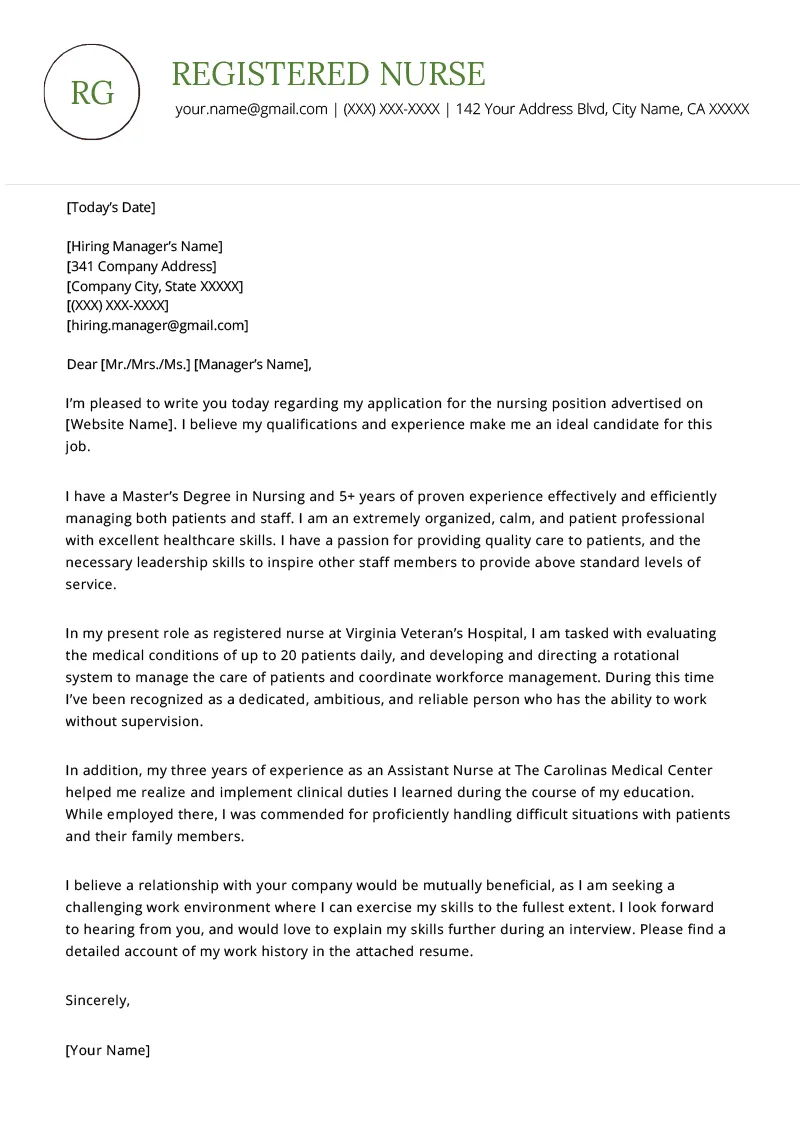
Crafting a Nursing Cover Letter Key Elements
A nursing cover letter is your first impression on a potential employer It’s your chance to showcase your skills, experience, and passion for nursing. A well-crafted cover letter can significantly increase your chances of landing an interview. This guide provides secrets and top tips to help you write a cover letter that stands out. Learn how to tailor your letter to specific job requirements, highlight your accomplishments, and demonstrate why you’re the ideal candidate for the nursing position.
Header and Contact Information
The header of your cover letter is crucial as it establishes professionalism and makes it easy for the hiring manager to contact you. It should be at the top of the document and include both your information and the hiring manager’s details. Accuracy and attention to detail here are paramount. Always double-check the information to avoid any errors.
Applicant’s Contact Information

Start with your full name, address, phone number, and professional email address. Ensure your email address is professional avoid using nicknames or casual language. Make it easy for the hiring manager to reach you, and keep the information up-to-date.
Hiring Manager’s Contact Information
If possible, address the cover letter to a specific person such as the hiring manager or the nurse manager. Find out their name and title, and include their contact information if available. This personal touch can make your application stand out. Using a specific name shows you’ve done your research and are genuinely interested in the position. If the name isn’t available, you can use a professional greeting instead.
Professional Greeting
Start your cover letter with a professional greeting such as “Dear Mr/Ms/Mx Last Name” or “Dear Hiring Manager”. Avoid generic greetings like “To Whom It May Concern”. Using a name shows you’ve taken the time to personalize your application and increases the chance of your application getting noticed. A well-crafted greeting sets a positive tone for the rest of your letter.
The Opening Paragraph Making a Strong First Impression

The opening paragraph is your opportunity to grab the reader’s attention. Briefly state the position you’re applying for and how you found it. Mention something specific that attracted you to the role or the healthcare facility. Clearly state your enthusiasm for the opportunity and your key qualifications. This section should be concise, compelling, and designed to make the hiring manager want to read more. Demonstrate your enthusiasm and briefly mention a key accomplishment or skill relevant to the job.
Highlighting Relevant Nursing Experience
In the body of your cover letter, emphasize your nursing experience, making it relevant to the specific job. Provide details about your past roles, clinical settings, and any specializations. Quantify your achievements whenever possible, and showcase your skills and competencies. Use action verbs to describe your responsibilities and accomplishments. This section is where you demonstrate your capabilities and convince the hiring manager that you have the experience needed to excel in the role. Tailor your description to match the job description.
Showcasing Clinical Skills and Expertise
Highlight your clinical skills and expertise relevant to the job requirements. Mention specific procedures or technologies you’re proficient in. Tailor this section to match the job description and demonstrate your ability to perform key nursing duties. Provide examples of how you have used these skills effectively in the past. Focus on skills that directly relate to the position and the needs of the patients.
Quantifying Achievements

Whenever possible, quantify your achievements with data. Use numbers to demonstrate your impact in previous roles, for example, “Reduced patient falls by 15%” or “Improved patient satisfaction scores by 20%”. Quantifiable achievements are more impactful than generic statements. They provide concrete evidence of your capabilities. This shows that you can make a measurable difference.
Emphasizing Skills and Competencies
List essential skills and competencies required for nursing roles, such as patient assessment, medication administration, wound care, and electronic health record documentation. Match your skills with those listed in the job description. Highlight experiences where you demonstrated these skills and provide specific examples. Always tailor this section to align with the requirements outlined in the job posting. Use the job description as a guide to determine which skills to emphasize.
Demonstrating Soft Skills
Demonstrate your soft skills, such as communication, teamwork, empathy, and problem-solving. Provide specific examples of how you’ve used these skills in a clinical setting. Highlight your ability to work under pressure, communicate effectively with patients and colleagues, and handle difficult situations. Soft skills are essential for nursing roles, as they contribute to patient care and team collaboration. Illustrate your interpersonal skills through your experiences and show how you’ve used them to improve patient outcomes.
Why You’re a Great Fit for This Role

Explain why you are a good fit for the role, including how your experience and skills align with the job requirements. Share what attracts you to this specific position and healthcare facility. Make sure the hiring manager understands your passion for nursing and the healthcare facility. Tailor your letter to show that you have researched the healthcare facility and understand its mission and values. Demonstrate a genuine interest in the opportunity and how your skills and experience can contribute to their goals.
Researching the Healthcare Facility
Research the healthcare facility. Understand its mission, values, and the services it provides. Show that you understand the facility’s goals and how your skills can contribute to their success. Visit the facility’s website, read recent news articles, and understand their commitment to patient care. Mention any specific programs or initiatives that interest you. Show that you have taken the time to learn about the facility and its culture.
Aligning Your Goals with the Facility’s Mission
Align your goals with the facility’s mission, demonstrating how your values align with theirs. Explain how you see yourself contributing to the organization’s goals. This shows you’re not just looking for a job but are genuinely interested in being part of their team. Show how your values and goals align with the facility’s patient care philosophy and how you can contribute to their success. Show how you align with the facility’s mission.
Expressing Enthusiasm and Passion

Express your enthusiasm and passion for nursing and the specific role. Highlight what motivates you and what you find rewarding in nursing. This should be a clear reflection of your interest in this opportunity. Share your passion for providing excellent patient care and working in a healthcare setting. Show that you are eager to contribute to the team and make a difference in patients’ lives.
The Closing Paragraph Call to Action
End your cover letter with a strong closing paragraph. Express your gratitude, reiterate your interest, and include a call to action. This section should leave a lasting positive impression and encourage the hiring manager to take the next step. Ensure you reiterate your enthusiasm and provide your contact information. This final paragraph should be concise and effective.
Expressing Gratitude
Thank the hiring manager for their time and consideration. Express your appreciation for the opportunity to apply for the position. Keep it professional and sincere, demonstrating respect for the hiring process. Thank the hiring manager for their attention and time.
Including a Call to Action

End with a call to action, such as stating your availability for an interview and providing your contact information. Make it easy for the hiring manager to reach you. Clearly state your availability and encourage the hiring manager to contact you. This encourages them to take the next step and move forward with your application.
Formatting and Proofreading Your Cover Letter
Ensure that your cover letter is well-formatted and free of errors. Proper formatting and proofreading are essential to make a professional impression. Formatting and proofreading are critical steps in ensuring your cover letter looks polished and professional.
Formatting Guidelines
Use a professional font, such as Times New Roman or Arial, and a font size between 10 and 12 points. Use one-inch margins. Maintain a consistent format throughout the document. Keep the letter concise and well-structured, making it easy to read. Use a readable font, and ensure the spacing is appropriate for readability.
Proofreading for Errors

Proofread your cover letter carefully for any errors in grammar, spelling, and punctuation. Have someone else review it as well, as a fresh pair of eyes can often catch mistakes you might miss. Double-check all names, dates, and contact information. Proofreading is a critical step to make sure your application is professional. Ensure accuracy to avoid errors.
Reviewing and Editing Your Cover Letter
Review and edit your cover letter multiple times to ensure it aligns with the job requirements. Tailor your cover letter to the specific job, highlighting relevant skills and experience. Make sure your language is clear, concise, and professional. Revise and edit your cover letter thoroughly before submitting it.