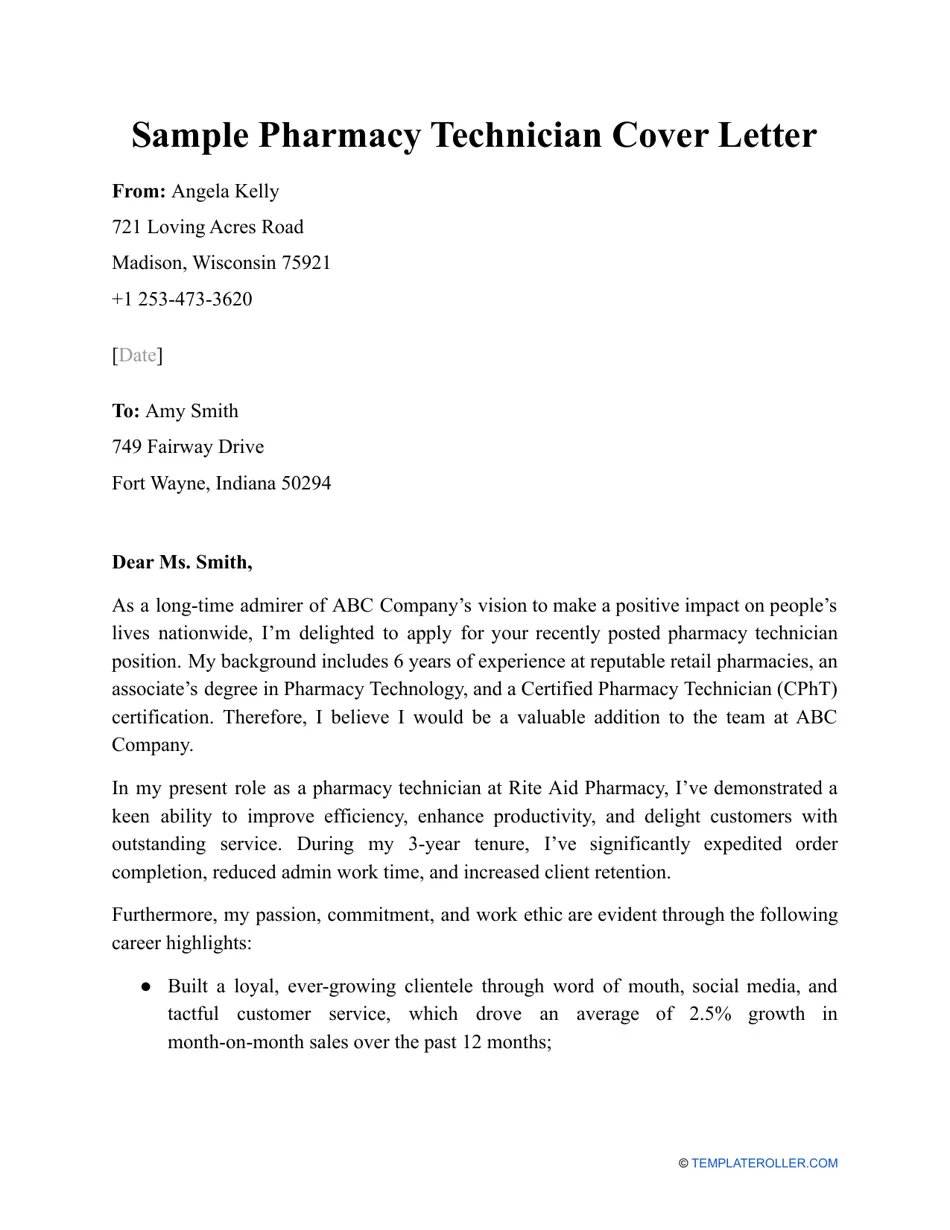
What is a Pharmacy Student Cover Letter
A pharmacy student cover letter is a crucial document that accompanies your resume when applying for internships, part-time positions, or full-time pharmacist roles. It’s your first chance to make a strong impression on potential employers and showcase why you’re the ideal candidate. This guide provides a comprehensive overview of how to craft a compelling cover letter that effectively highlights your skills, experiences, and aspirations as a pharmacy student. A well-written cover letter is a powerful tool to demonstrate your professionalism, enthusiasm, and commitment to the field of pharmacy. It provides a platform to expand on the details in your resume and tell your unique story, making you stand out from other applicants.
Why is a Cover Letter Important for Pharmacy Students
Cover letters are particularly important for pharmacy students because they allow you to personalize your application and connect with the employer on a deeper level. Unlike your resume, which provides a factual summary of your qualifications, a cover letter gives you the opportunity to articulate your career goals, express your passion for pharmacy, and explain why you’re interested in a specific position or company. This is especially vital if you have limited work experience, as it allows you to emphasize your transferable skills, academic achievements, and any volunteer work or extracurricular activities that demonstrate your commitment to pharmacy. A well-written cover letter can significantly increase your chances of securing an interview and ultimately landing your desired role.
Key Components of a Pharmacy Student Cover Letter

A strong pharmacy student cover letter includes several key components. These components work together to present a complete and professional picture of you as a potential employee. Each part serves a specific purpose, from introducing you to expressing your interest and qualifications. Carefully crafting each of these sections will help you create a cover letter that makes a positive impression and highlights your strengths.
Header Information
The header should include your contact information. This typically includes your full name, address, phone number, and email address. It should be formatted clearly and professionally. Ensure that your email address is appropriate and professional. This section makes it easy for employers to contact you.
Your Contact Information
At the top of your cover letter, include your full name, address, phone number, and professional email address. Use a clear and easy-to-read font. Ensure that your contact information is accurate and up-to-date. This allows the employer to easily reach out to you.
Recipient’s Contact Information

Below your contact information, include the employer’s or hiring manager’s name, title, and company address. If you can find the name of the specific person, always address the letter to them. It demonstrates that you’ve done your research and are attentive to detail. If the name is not available, use a generic but professional salutation.
Salutation
Start your cover letter with a professional salutation. If you know the hiring manager’s name, use “Dear Mr./Ms./Dr. [Last Name].” If not, “Dear Hiring Manager” is acceptable. Avoid generic greetings like “To Whom It May Concern.” A personalized salutation immediately sets a more professional tone.
Body of the Cover Letter
The body of your cover letter is where you showcase your qualifications and explain why you’re a great fit for the position. It should be concise, well-organized, and tailored to the specific job you’re applying for. This section is divided into paragraphs, each serving a specific purpose, allowing you to present yourself effectively.
First Paragraph Introduction

In your introduction, state the position you are applying for and how you found the opportunity. Briefly mention why you are interested in the role and the company. Highlight your enthusiasm. Show that you understand the job description and company goals. It sets the stage for the rest of your letter.
Highlighting Your Pharmacy Student Qualifications
Use the body paragraphs to highlight your qualifications. Discuss relevant coursework, academic achievements, and any specialized knowledge or skills you possess. If you have any certifications, awards, or honors, mention them here. Provide specific examples to illustrate your abilities and achievements, and align your qualifications with the job requirements. (Image: pharmacy-student-qualifications.webp)
Showcasing Relevant Experience
Describe any relevant experience, such as internships, volunteer work, or pharmacy technician roles. Even if your experience is limited, focus on what you’ve learned and the skills you’ve developed. Quantify your accomplishments whenever possible. Use action verbs to make your experiences sound dynamic and impactful. Highlight specific projects you have worked on. (Image: pharmacy-student-experience.webp)
Mentioning Skills and Abilities

List your skills and abilities that align with the job description, such as communication, attention to detail, problem-solving, teamwork, and technical skills (e.g., experience with pharmacy software). Provide examples of how you have used these skills in the past. Show how your skills make you a valuable asset to the employer. Be specific and provide evidence to support your claims. (Image: pharmacy-student-skills.webp)
Expressing Enthusiasm and Interest
Show your enthusiasm for the position and the company. Explain why you’re interested in this specific opportunity and what you hope to gain from the experience. Research the company and mention what aspects of their mission, values, or culture resonate with you. Express a genuine interest in contributing to the pharmacy and the team. This shows that you are committed and passionate about the role. (Image: pharmacy-student-enthusiasm.webp)
Closing Paragraph
In your closing paragraph, summarize your key qualifications and reiterate your interest in the position. Thank the hiring manager for their time and consideration. Clearly state your intention to follow up and how you will do so. Show that you are eager to hear from them and discuss your application further.
Call to Action

Include a call to action in your closing paragraph. State your availability for an interview and mention how you can be contacted. It also suggests you are proactive and eager to learn more about the role. This is a way of showing that you are serious about the opportunity.
Formal Closing
End your cover letter with a formal closing, such as “Sincerely” or “Best regards.” Sign your name above the typed closing. It is a sign of professionalism and respect.
Additional Tips for Pharmacy Students
Tailoring your cover letter to each specific job is essential. Research the company and the role to identify the key skills and experiences they are looking for. Highlight your relevant qualifications and customize your letter to match their requirements. Show that you have done your homework. This demonstrates your genuine interest.
Proofreading Your Cover Letter

Before submitting your cover letter, carefully proofread it for any errors in grammar, spelling, and punctuation. A cover letter full of mistakes can create a negative impression, regardless of your qualifications. Ask a friend, professor, or career advisor to review your cover letter to catch any errors you might have missed. Ensure your letter is easy to read and free of mistakes. (Image: pharmacy-student-proofreading.webp)
Tailoring Your Cover Letter
Customize your cover letter for each job application. Review the job description thoroughly, and highlight the skills, experiences, and qualifications that align with the employer’s needs. Use keywords from the job description to show that you are a perfect match. This personalization demonstrates your attention to detail and your genuine interest in the position.
Formatting your Cover Letter
Choose a professional and readable font, such as Times New Roman, Arial, or Calibri. Use standard margins and a clear layout. Keep your cover letter concise, ideally within one page. Use bullet points to highlight key skills or accomplishments. Ensure that the document is easy to read and visually appealing.
Pharmacy Student Cover Letter Examples
Review examples of pharmacy student cover letters to get ideas for formatting and content. Analyze how other students have successfully showcased their qualifications and experiences. Adapt the example content to your own skills and experiences, and personalize it to match the job requirements. You can find many cover letter examples online to help you create a compelling application. (Image: pharmacy-student-cover-letter-example.webp)