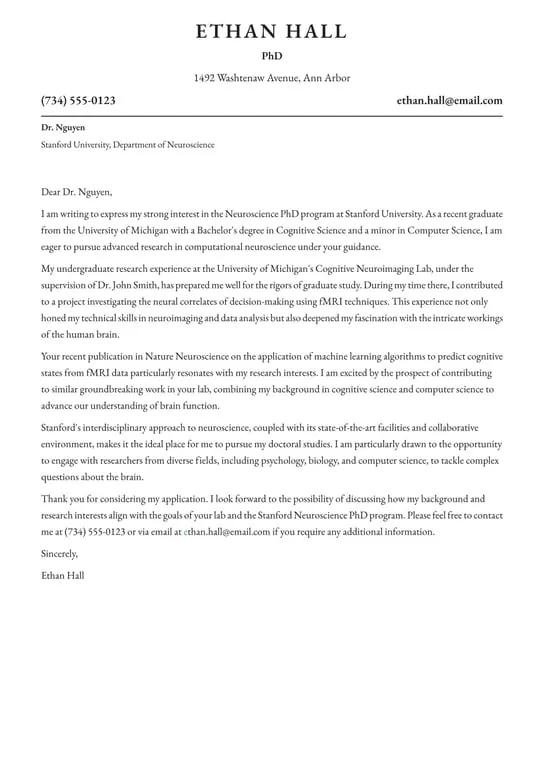
Unveiling PhD Cover Letter Secrets
A PhD cover letter is your first and often most crucial opportunity to make a lasting impression on the admissions committee. It’s not merely a formality; it’s a strategic tool that allows you to showcase your qualifications, passion, and suitability for the program. Crafting a compelling cover letter can significantly increase your chances of acceptance and is a skill that requires careful planning, attention to detail, and a deep understanding of what admissions committees seek. This guide delves into the secrets of writing a standout PhD cover letter that captures attention, highlights your strengths, and effectively communicates your potential as a future researcher. The aim is to provide you with the insights and strategies needed to create a cover letter that distinguishes you from the competition.
Research Your Target Program
Thorough research is the foundation of any successful PhD application, especially when it comes to your cover letter. Before you even begin to draft, invest time in understanding the specific program you are applying to. Explore the university’s website, paying close attention to the department’s mission, research areas, and faculty profiles. The more you understand about the program’s values and priorities, the better equipped you will be to tailor your cover letter to reflect your alignment with them. Visit the program’s website, read about current research projects, and familiarize yourself with the professors’ interests. This research will provide valuable insights to help you personalize your cover letter and show the admissions committee that you have taken the time to learn about their program.
Understand the Program’s Focus

Every PhD program has its unique focus, whether it’s interdisciplinary research, theoretical approaches, or practical applications. Identifying the program’s primary emphasis is essential for tailoring your cover letter. Consider the program’s curriculum, research facilities, and the type of projects that students typically undertake. Does the program prioritize collaborative work or individual study? Are there any specific areas of research that are particularly emphasized? Understanding the program’s focus will enable you to frame your skills, experiences, and research interests in a way that resonates with the admissions committee. This will help you show how your goals align with those of the program.
Analyze Faculty Interests
Faculty members are the heart of any PhD program, and understanding their interests is paramount. Examine the faculty profiles on the department’s website to learn about their research specializations, publications, and current projects. Identifying faculty members whose research aligns with your interests allows you to highlight your potential to contribute to their work. You can mention specific professors whose work you admire and explain how your research interests connect with theirs. You should also consider reaching out to professors whose work aligns with your own, expressing your interest in their research and seeking their insights into the program. This initiative demonstrates your proactive nature and genuine interest in the program.
Highlight Relevant Skills and Experience
Your PhD cover letter is your opportunity to showcase the skills and experiences that make you a strong candidate. Focus on the qualifications that are most relevant to the program and the research you plan to undertake. Begin by identifying the key skills that the program values, such as research experience, analytical skills, and communication skills. Then, provide specific examples of how you have demonstrated these skills in your academic or professional career. This could include your involvement in research projects, presentations at conferences, publications in academic journals, or any relevant professional experience. Be sure to use action verbs to describe your accomplishments and quantify your achievements whenever possible.
Quantify Your Achievements

Numbers speak louder than words when it comes to highlighting your achievements. Whenever possible, quantify your accomplishments to provide concrete evidence of your skills and abilities. For example, instead of saying ‘I conducted research,’ you could say ‘I conducted research on [specific topic] which resulted in a 20% improvement.’ Similarly, if you presented at a conference, mention the number of attendees or the scope of the event. Quantifying your achievements helps the admissions committee to understand the impact and significance of your work. It gives them a clear picture of your accomplishments and demonstrates your ability to produce results. Use metrics like the number of publications, presentations, grants obtained, or awards received to show the value of your work.
Showcase Research Projects
Research experience is a vital component of a strong PhD application. In your cover letter, dedicate significant space to describing your research projects. Explain the context of the research, your role in the project, the methodology used, and the key findings. Highlight any challenges you overcame, and the skills you developed during the project. Be specific about your contributions, such as designing experiments, analyzing data, or writing reports. Emphasize the skills relevant to the program you are applying to. If you have publications or presentations related to your research projects, be sure to list them in your cover letter. This demonstrates your ability to conduct research at a high level and your capacity to make scholarly contributions. Also, mention the impact your research has had on the field.
Tailor to the Specific Program
A generic cover letter will likely be overlooked. Customizing your letter to each program is essential to convey your genuine interest and suitability. Tailoring means more than just changing the program’s name; it requires a deep understanding of the program’s values, research areas, and faculty. Adapt your letter to align with the program’s specific focus and highlight the skills and experiences that are most relevant to their research. Mention specific faculty members whose work aligns with your interests and explain how your goals connect with the program’s objectives. This level of customization shows the admissions committee that you have invested time and effort to learn about their program, making you a more compelling candidate. Avoid using generic phrases; rather, provide concrete examples of your accomplishments and how they align with the program.
Address Program Requirements

Many PhD programs have specific requirements or preferences for cover letters. Some programs may ask you to address particular questions, describe specific experiences, or adhere to certain formatting guidelines. Carefully review the program’s application instructions and tailor your letter to meet these requirements. This includes the length of the cover letter, the types of information they want you to provide, and any specific skills or experiences they emphasize. Failing to follow instructions can signal a lack of attention to detail, which can negatively impact your application. By carefully addressing program-specific requirements, you demonstrate your ability to follow instructions and your commitment to the program.
Demonstrate Passion and Motivation
A PhD program is a demanding undertaking, and admissions committees seek candidates with genuine passion and motivation. Your cover letter should clearly convey your enthusiasm for research and your commitment to pursuing a PhD. Articulate why you are interested in the specific program and what motivates you to study this particular field. Share any personal experiences or events that have shaped your academic interests. It can be an engaging narrative that shows your genuine interest. Show your enthusiasm for the program and how it aligns with your goals. Be authentic and let your personality shine through, but always maintain a professional tone. The more passionate you sound, the more compelling you will be as a candidate.
Express Your Research Interests
Clearly articulate your research interests and how they align with the program’s focus. Explain the specific topics you are interested in exploring and why they appeal to you. Connect your research interests to the faculty members whose work resonates with you. Explain how the program’s resources, research facilities, and curriculum will help you achieve your research goals. Providing specific examples of your research interests will give the admissions committee a clear picture of what you intend to study during your PhD and showcase your research potential. Demonstrate your awareness of current research trends in your field and how your work could contribute to them. Be as specific as possible, and explain how your research interests will shape your career.
Showcase Your Goals

Your cover letter should also outline your career goals and how a PhD from this program will help you achieve them. What do you hope to accomplish after completing your PhD? Do you aspire to become a professor, a researcher in industry, or pursue another path? Explain how the program will prepare you for your chosen career path. Connect your career goals to the program’s mission and the department’s alumni success stories. Showing a clear understanding of your long-term career goals demonstrates your dedication and commitment to the PhD program. This will convey a sense of purpose, making you a stronger candidate. This shows the committee that you have a clear vision for your future.
Structure Your Cover Letter Effectively
The structure of your cover letter is essential for creating a positive impression. A well-organized letter that follows a logical flow will be easier to read and more impactful. Typically, a strong cover letter includes a compelling opening, concise body paragraphs, and a powerful conclusion. The goal is to make your letter clear, concise, and engaging. Each section should have a clear purpose and contribute to the overall narrative of your qualifications. Consider your audience and the information they are looking for. Organize your thoughts in a structured way, and use headings and subheadings to improve readability and enhance the flow of your letter. Ensure your letter is easy to navigate, which helps the committee quickly find the information they need.
Craft a Compelling Opening
The opening paragraph of your cover letter is your first chance to grab the reader’s attention. It sets the tone for the entire letter and should immediately convey your interest in the program and your key qualifications. Start with a strong hook that captures the reader’s interest. It might be a brief anecdote, a striking statement about your research interests, or a reference to a professor whose work has influenced you. Clearly state the specific PhD program you are applying to and your motivation for applying. Briefly introduce yourself and highlight one or two of your most relevant achievements. Make sure your opening is concise, engaging, and sets the stage for the rest of your cover letter. A memorable opening makes it more likely for your application to stand out.
Develop Strong Body Paragraphs

The body paragraphs of your cover letter provide the details that support your qualifications and showcase your suitability for the PhD program. Each paragraph should focus on a specific aspect of your experience or skills, with clear topic sentences and supporting evidence. Use a clear and concise writing style, avoiding jargon or overly complex language. Use strong action verbs, and be as specific as possible. Use the body paragraphs to describe your research experience, highlighting your projects, your role, and your contributions. Connect your skills and experiences to the program’s requirements and faculty interests. Structure your body paragraphs logically, with each paragraph building on the previous one to create a coherent and compelling narrative. Avoid rambling and focus on the most important information.
Write a Powerful Conclusion
The conclusion of your cover letter should leave a lasting impression on the admissions committee. Summarize your main qualifications and restate your interest in the program. Reiterate your enthusiasm for the opportunity to pursue a PhD at the university. Express your gratitude for the committee’s time and consideration. End with a confident statement that emphasizes your readiness to contribute to the program. Keep it concise and focused. This paragraph is your final chance to make a positive impact. Avoid any new information or claims in the conclusion. A compelling conclusion will help reinforce your candidacy and reinforce your interest in the program, leaving a lasting impression on the committee.
Proofread and Edit Meticulously
Before submitting your cover letter, proofread and edit it carefully to ensure it is free of errors. Errors in grammar, spelling, and punctuation can create a negative impression and detract from your qualifications. Set aside enough time to thoroughly review your cover letter multiple times. Read your letter aloud to catch any awkward phrasing or errors in the flow of your writing. Make sure you edit the letter with a fresh perspective, and ask someone to proofread it for you, and to check it for grammatical and spelling errors. Don’t rely solely on spell check; also use grammar tools to identify and correct writing errors. You want to put your best foot forward; your attention to detail in your cover letter suggests your attention to detail as a student.
Check for Grammar and Spelling Errors

Thoroughly check your cover letter for grammatical and spelling errors. These errors can distract the reader and make your application appear unprofessional. Use a spell-checker, but also review the text manually to ensure accuracy. Pay attention to common errors like incorrect punctuation, subject-verb agreement, and the misuse of homophones (e.g., there, their, they’re). Proofread your letter multiple times, preferably on different days, to catch errors that you may have missed initially. Another option is to seek help from a trusted friend, mentor, or colleague. Ensure every word is correct and that the letter reads smoothly and professionally.
Ensure Clarity and Conciseness
Clarity and conciseness are essential for making your cover letter easy to read and understand. Keep your sentences and paragraphs short and to the point. Avoid using jargon or overly complex language that could confuse the reader. Ensure each sentence serves a specific purpose and contributes to your overall message. Use strong verbs and active voice to make your writing more dynamic and engaging. Eliminate unnecessary words and phrases. Aim for a concise, well-written cover letter that highlights your strengths and conveys your genuine interest in the PhD program.