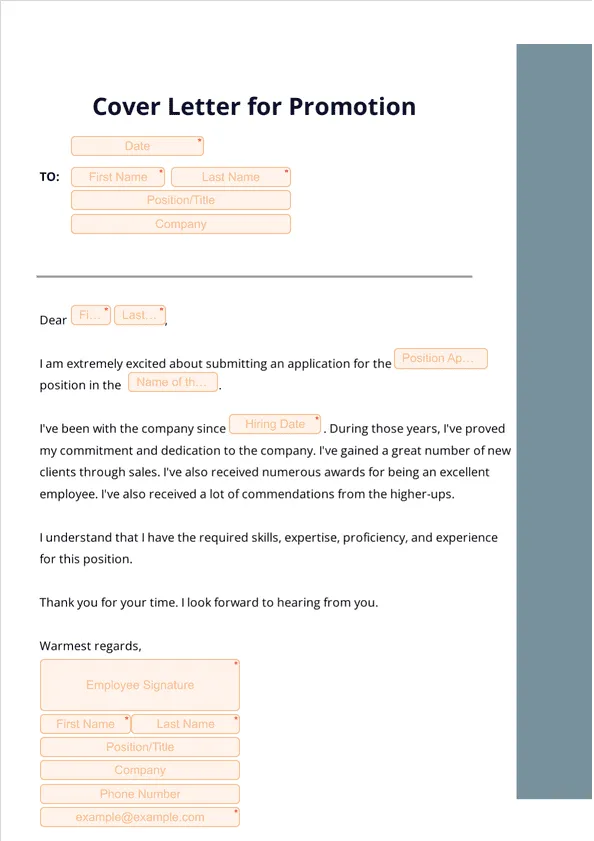
Understanding the Promotion Cover Letter
A promotion cover letter is a crucial document when you’re aiming to climb the career ladder within your current company. It’s your opportunity to present a compelling case for why you deserve the promotion, highlighting your qualifications, accomplishments, and suitability for the new role. Unlike a standard cover letter for an external job application, a promotion cover letter benefits from your existing knowledge of the company culture and your established relationships with colleagues and management. It is a strategic communication tool, aiming to impress the hiring manager by demonstrating your understanding of the new position’s requirements and the value you will bring to it. Crafting an effective cover letter involves showcasing your achievements, aligning your skills with the job’s demands, and expressing your sincere enthusiasm for the opportunity.
Research the Role & Company
Before you begin writing, thoroughly research the specifics of the promotion you’re seeking. Understand the responsibilities, expectations, and required skills outlined in the job description. Examine the company’s current projects, initiatives, and goals. This research allows you to tailor your cover letter to directly address the company’s needs and demonstrate your understanding of how you can contribute to its success in the new role. Reviewing the company’s website, recent press releases, and internal communications can provide valuable insights into their priorities and values. Also, consider talking to colleagues or supervisors who have insights into the new role or the team you’d be joining. This ensures you can speak with authority and show how your skills and experience align with the company’s current trajectory.
Highlight Relevant Achievements

Your promotion cover letter’s core should be your relevant achievements. Focus on accomplishments that demonstrate your ability to excel in the new role. This means selecting achievements that align with the responsibilities and skills detailed in the job description. Don’t just list your duties; instead, describe how you exceeded expectations, solved problems, or contributed to the company’s success. Use specific examples to illustrate your impact. Consider projects you led, problems you solved, or innovations you implemented. Clearly articulate the results you achieved, such as increased sales, improved efficiency, or successful project completion. This targeted approach makes it clear that you are the ideal candidate for the promotion.
Quantify Your Accomplishments
When describing your achievements, use numbers, data, and specific metrics to quantify your impact. Instead of saying, “Improved customer satisfaction,” say, “Increased customer satisfaction scores by 15% through implementing a new feedback system.” Quantifying your accomplishments provides concrete evidence of your abilities and makes your claims more credible. Use percentages, dollar amounts, time savings, or any other measurable data to support your statements. This data-driven approach demonstrates your analytical skills and ability to produce results. Providing measurable results offers a clear picture of the value you bring to the company.
Use Action Verbs
Start each bullet point or paragraph describing your achievements with strong action verbs. Action verbs immediately capture the reader’s attention and make your accomplishments more impactful. For example, use verbs such as “managed,” “developed,” “implemented,” “led,” “achieved,” “improved,” “increased,” “reduced,” or “created.” These verbs clearly show what you did and the actions you took. By starting your sentences with action verbs, you create a dynamic and engaging narrative. This approach will make your cover letter more readable and memorable, highlighting your proactive approach and the value you bring to the company.
Showcase Your Skills

Identify the key skills required for the promotion and demonstrate how you possess them. Highlight both hard skills (technical expertise) and soft skills (communication, leadership, teamwork) that are relevant to the new role. Give specific examples of how you’ve used these skills in your current role. Provide evidence of your proficiency in these areas by referring to specific projects, tasks, or situations where you successfully applied these skills. This can include instances where you led a team, solved a complex problem, or developed a new process. By aligning your skills with the job requirements, you make a strong case for your suitability for the promotion.
Tailor Your Letter
Customize your promotion cover letter for each specific role. Avoid using a generic template. Tailor the content to match the job description and the company’s culture. Highlight only the skills and experiences that are most relevant to the new position’s requirements. Use the language and keywords from the job posting in your letter to demonstrate your understanding of the role. Show how your past accomplishments directly contribute to the success of the team or department you’re aiming to join. This personalized approach demonstrates your genuine interest in the specific opportunity and shows that you understand what the company needs.
Proofread and Edit
Before submitting your promotion cover letter, carefully proofread and edit it. Errors in grammar, spelling, and punctuation can undermine your professionalism. Ask a colleague or friend to review your letter for clarity, accuracy, and any potential areas for improvement. Ensure your letter is well-organized, easy to read, and free of jargon. Double-check all names, dates, and other specific details. A well-written, error-free cover letter reflects your attention to detail and professionalism. This attention to detail helps make a positive first impression and ensures your message is clear and persuasive.
Express Enthusiasm and Confidence

Throughout your cover letter, express genuine enthusiasm for the promotion and your belief in your ability to excel in the new role. Show your excitement about the opportunity and how it aligns with your career goals. Demonstrate confidence in your skills and achievements without being arrogant. Emphasize your understanding of the company’s mission and your commitment to contributing to its success. This enthusiasm and confidence will make a positive impression on the hiring manager and increase your chances of getting the promotion.
Conclude with a Strong Call to Action
End your promotion cover letter with a strong call to action. Clearly state your interest in discussing the promotion further and express your availability for an interview. Thank the reader for their time and consideration. Be direct and confident in your request. This action reinforces your interest and encourages the hiring manager to move forward with the application process. Offering a specific time to discuss your application or following up a few days later shows initiative and determination. This final touch ensures you stay top-of-mind and increase the likelihood of receiving an interview.