Understand the Purpose of a Property Management Cover Letter
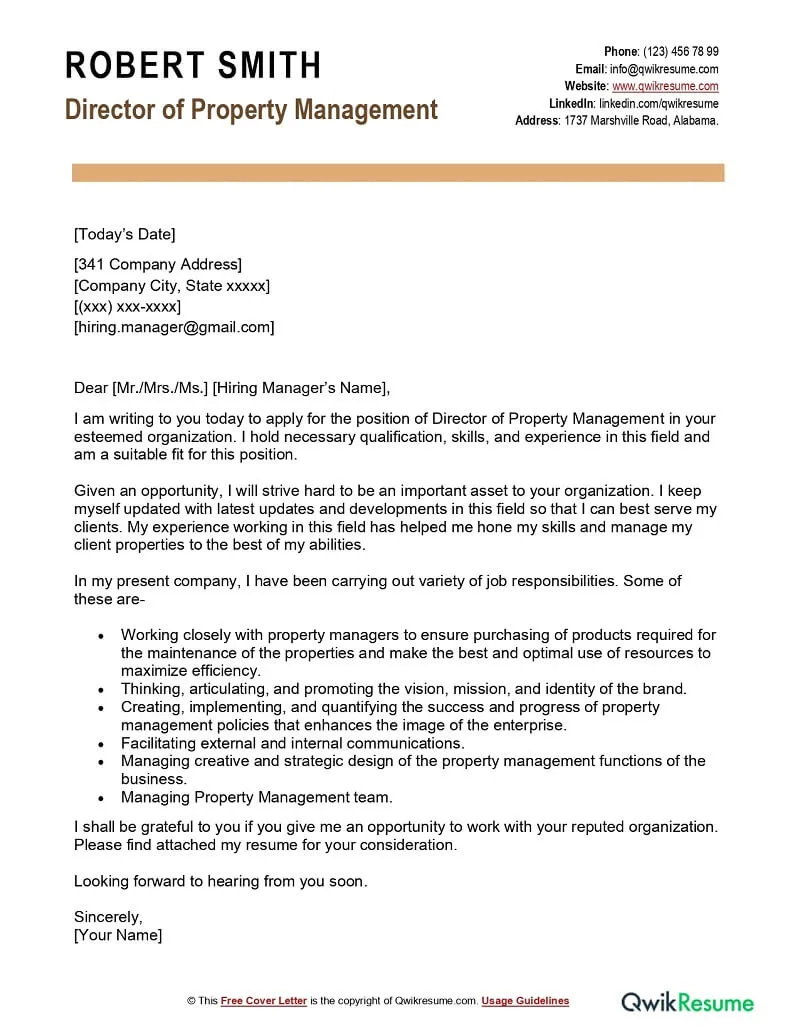
A property management cover letter is your first introduction to a potential employer. It serves as a crucial tool to showcase your interest, skills, and qualifications, even without direct property management experience. The primary goal is to persuade the hiring manager that you are a suitable candidate, highlighting your relevant abilities and enthusiasm for the role. It goes beyond your resume by providing context and personality, allowing you to elaborate on your strengths and explain how you can contribute to the company’s success. Your cover letter should demonstrate your understanding of the property management field and why you are a strong fit, despite lacking direct experience. It should show how you can bring in the company with your skillset.
Essential Components of a Property Management Cover Letter
A compelling property management cover letter comprises several key elements, each playing a vital role in conveying your suitability for the position. These components work together to create a cohesive and persuasive narrative, illustrating your capabilities and interest in the role. A well-structured cover letter includes a professional header, a personalized opening, compelling body paragraphs that highlight relevant skills and experiences, and a strong closing statement. The combination of these elements offers a complete view of your qualifications, ensuring your application stands out. Paying close attention to each of these sections and tailoring them to the specific job requirements is crucial.
Contact Information & Formatting

Start with your contact information at the top left of the letter, including your name, address, phone number, and professional email. Use a clear, readable font like Arial or Times New Roman, and maintain a consistent font size (11-12 points). Ensure proper spacing and alignment for easy reading. Address the letter to the hiring manager by name, if possible, to show you’ve done your research and taken the time to personalize your application. Keep the tone professional, and avoid using slang or casual language. The overall formatting should be clean and organized, making it simple for the hiring manager to quickly read and grasp the essential details.
Opening Paragraph
Begin with a strong opening that grabs the reader’s attention. State the position you’re applying for and where you found the job posting. Immediately express your enthusiasm for the role and the company. Briefly mention a key skill or experience that makes you a great fit. Avoid generic phrases, and instead, show a genuine interest in property management. You can show what makes you fit for the role, and why you have passion for the industry. Make sure the opening paragraph establishes your intention, shows your passion for the role, and highlights the critical points that will be discussed in the following sections. This approach will catch the reader’s interest from the start.
Body Paragraphs Showcasing Relevant Skills
The body paragraphs are the heart of your cover letter. They should focus on the skills and experiences that make you suitable for the property management role, even without direct experience. Emphasize transferable skills such as organization, communication, problem-solving, and customer service. Provide specific examples from your past experiences to show how you have used these skills. For instance, if you have experience managing projects, highlight how you organized tasks, met deadlines, and communicated with team members. Always tailor the skills you mention to the job description, making it easy for the hiring manager to connect your qualifications with the role requirements. Use these details to make a strong impression on the hiring manager.
Highlighting Transferable Skills

Transferable skills are crucial when you don’t have direct property management experience. These are skills you’ve gained in other jobs, volunteer work, or educational settings that can be applied to property management. Common transferable skills include customer service, communication, problem-solving, organization, time management, and attention to detail. Highlight these skills by providing specific examples of how you have used them in the past. For example, if you have experience in customer service, describe how you handled difficult situations or resolved customer issues. If you have organizational skills, explain how you managed projects or tasks, and how you ensured all requirements were met. Show how your prior skills contribute to the role.
Quantifying Achievements from other experiences
Quantifying your achievements helps demonstrate the impact you’ve made in past roles. Use numbers and data to illustrate your accomplishments, even if they are unrelated to property management. For example, if you improved customer satisfaction in a previous role, quantify the improvement by stating the percentage increase. If you managed a project, mention the budget or the number of people involved. Include details that measure how you made a difference. Quantifying your achievements gives concrete evidence of your abilities and makes your cover letter more persuasive. Always ensure you provide facts that support your claims.
Closing Paragraph & Call to Action
In your closing paragraph, reiterate your interest in the property management position and thank the hiring manager for their time and consideration. Reiterate your confidence and enthusiasm. State your availability for an interview and provide your contact information again. A strong call to action encourages the hiring manager to move forward with your application. Indicate that you look forward to hearing from them soon and that you are available for an interview. Make sure to proofread and edit your entire cover letter carefully before sending it. This is your chance to make a lasting impression, so make the most of it.
Tailoring Your Cover Letter for Property Management

Customization is essential for a property management cover letter. Tailor your letter to each job application, addressing the specific requirements and the needs of the property management company. Read the job description carefully and highlight the skills and experiences that match. Research the company and mention how your qualifications align with their values and goals. By customizing your letter, you show the hiring manager that you’re genuinely interested in the role and have taken the time to understand their needs. This demonstrates your commitment and increases your chances of standing out from other candidates.
Researching the Property Management Company
Before writing your cover letter, research the property management company. Visit their website and learn about their mission, values, and the properties they manage. This information will help you tailor your letter and show your genuine interest in the company. If possible, find out who the hiring manager is and address your letter to them by name. Include specific details that reflect your understanding of the company’s work, such as mentioning their properties or their focus on customer service. Researching the company demonstrates your professionalism and enhances your application.
Highlighting Specific Job Requirements
Carefully review the job description and highlight the specific requirements mentioned. Identify the skills, experiences, and qualifications that the company is looking for, and make sure to address each of them in your cover letter. Use keywords from the job description to show that you understand what the company needs. Provide examples of how you have met similar requirements in the past. For instance, if the job requires strong communication skills, mention how you’ve effectively communicated with customers or team members in your previous roles. By highlighting job requirements, you will show you’re a perfect fit.
Proofreading and Editing Your Cover Letter

Proofreading and editing are critical steps in writing a professional cover letter. Check for any spelling, grammar, and punctuation errors that could detract from your application. Read your letter out loud to catch any awkward phrasing or sentence structure issues. Have a friend, family member, or career counselor review your letter for clarity and accuracy. Ensure your cover letter is well-written, easy to read, and free of any mistakes. A polished cover letter shows attention to detail and professionalism, making a positive impression on the hiring manager and making you stand out from the crowd.