Understanding the Importance of a Receptionist Cover Letter
A receptionist cover letter is your first opportunity to make a positive impression on a potential employer. It’s a crucial document that accompanies your resume, providing context, showcasing your personality, and highlighting why you are the ideal candidate for the position. In a competitive job market, a well-crafted cover letter can be the difference between getting an interview and being overlooked. It allows you to expand on your skills and experience, demonstrating your enthusiasm for the role and the company. Think of it as your personal introduction, setting the stage for a more in-depth conversation during an interview. A strong cover letter also helps to demonstrate your writing and communication skills, which are vital for any receptionist role.
Why a Cover Letter Matters
While a resume provides a summary of your work history and qualifications, a cover letter allows you to tell a story. It allows you to explain why you are interested in the specific position and the company, demonstrating your understanding of their needs and values. It showcases your communication skills, attention to detail, and ability to tailor your message to a specific audience. Moreover, a cover letter gives you the space to address any potential gaps in your resume, such as career changes or periods of unemployment. It also enables you to highlight your soft skills, such as communication, problem-solving, and time management, which are essential for a receptionist role. Most importantly, it’s your chance to stand out from the crowd and show why you are the best candidate for the job, beyond simply listing your skills.
Key Components of a Strong Receptionist Cover Letter

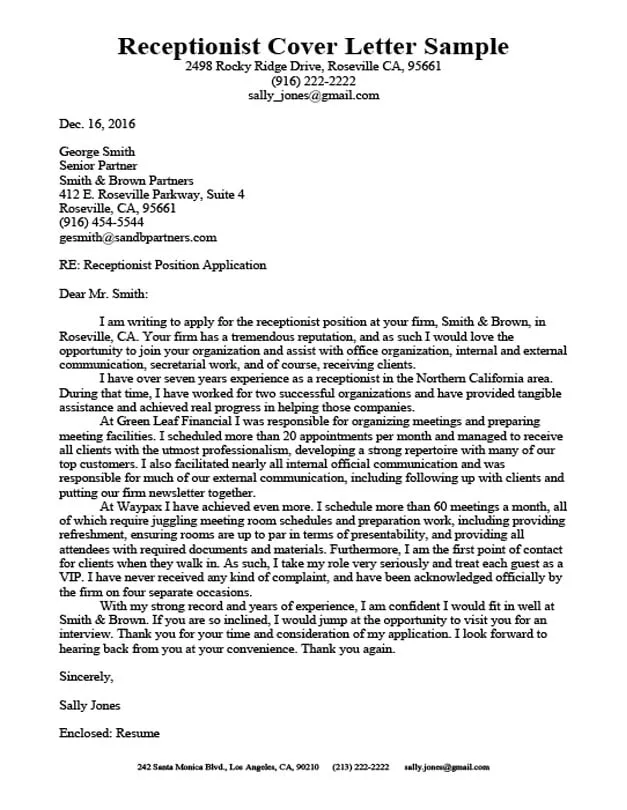
A compelling receptionist cover letter should include several key components that work together to present you in the best possible light. Begin with a professional header that includes your contact information, followed by the date and the hiring manager’s name and title (if known). The opening paragraph should immediately grab the reader’s attention, expressing your enthusiasm for the position and briefly mentioning why you are a great fit. The body paragraphs are the core of your letter, where you elaborate on your skills and experience, providing specific examples to support your claims. Finally, the closing paragraph should reiterate your interest, thank the reader for their time, and include a clear call to action, such as requesting an interview. Ensure your cover letter is free of grammatical errors and tailored to the specific job and company.
Essential Skills to Highlight
Receptionist positions require a diverse skill set, and your cover letter is the perfect place to showcase these abilities. Highlight your strong communication skills, both written and verbal, as receptionists frequently interact with clients, visitors, and colleagues. Emphasize your organizational skills, including time management, multitasking, and the ability to handle multiple phone lines. Proficiency in relevant software, such as Microsoft Office Suite, is also crucial. Any experience with appointment scheduling, managing correspondence, and handling office equipment should be mentioned. If you’re multilingual, be sure to include this in your skills. Demonstrating proficiency in customer service, problem-solving, and maintaining a professional demeanor under pressure are also vital for succeeding in this role.
Professional Communication and Tone
The tone of your receptionist cover letter should be professional, enthusiastic, and tailored to the specific company and role. Use clear, concise language, and avoid overly casual phrasing or slang. Maintain a positive and respectful tone throughout the letter, even if you’re addressing potential weaknesses. Proofread carefully to eliminate any grammatical errors, spelling mistakes, or typos, as these can undermine your credibility. Show genuine enthusiasm for the position and the company, and demonstrate your understanding of their mission and values. Always address the hiring manager by name (if possible), and customize your letter to reflect the specific requirements and expectations of the job description.
Structuring Your Receptionist Cover Letter

The structure of your receptionist cover letter plays a significant role in its effectiveness. A well-organized letter is easier to read and allows the hiring manager to quickly grasp your key qualifications. Start with a professional header, including your contact information (name, phone number, email, and potentially a LinkedIn profile URL) and the date. Next, include the hiring manager’s name, title, and the company address (if known). The body of the letter should be divided into logical paragraphs, with a clear introduction, supporting body paragraphs, and a compelling conclusion. Using short, well-defined paragraphs and bullet points when appropriate can improve readability. Proofread your letter carefully for any structural issues and ensure that it flows logically from one point to the next.
Header and Contact Information
The header of your receptionist cover letter is the first element the hiring manager will see, so it’s important to make a professional impression. Start with your full name, followed by your contact details. Include your phone number (preferably a mobile number where you can be easily reached) and a professional email address. Avoid using nicknames or unprofessional email addresses. If you have a LinkedIn profile, include the URL. The header should be clean, well-formatted, and easily readable. Ensure the contact information is accurate and up-to-date to facilitate easy communication from the hiring manager. Consider using a simple, consistent font for your header and throughout the entire document to maintain a professional look.
Greeting and Addressing the Hiring Manager
Addressing the hiring manager by name is a crucial step in personalizing your cover letter. If you know the hiring manager’s name, use it in your greeting. Research the company’s website or use LinkedIn to find the name of the hiring manager or the person responsible for recruitment. If you are unable to find the hiring manager’s name, using a general greeting such as “Dear Hiring Manager” or “Dear [Company Name] Team” is acceptable. Avoid using generic greetings like “To Whom It May Concern” as they make your letter seem impersonal. Always spell the name correctly and double-check the title to show attention to detail. This personal touch demonstrates your effort and interest in the position.
Opening Paragraph - Making a Great First Impression

The opening paragraph of your cover letter is your chance to capture the reader’s attention and make a positive first impression. Start by clearly stating the position you are applying for and where you found the job posting. Immediately express your enthusiasm for the role and the company. Briefly mention a key skill or experience that makes you a strong candidate for the position. The goal is to pique the reader’s interest and encourage them to continue reading. Keep the opening paragraph concise, typically between three to four sentences. Tailor your opening to the specific job and company, demonstrating that you’ve done your research and understand their needs.
Body Paragraphs – Showcasing Your Skills and Experience
The body paragraphs of your cover letter are where you provide the details that support your claims. This is where you showcase your skills and experience and demonstrate how they align with the requirements of the receptionist role. Each paragraph should focus on a specific skill or experience, providing concrete examples to illustrate your abilities. Use action verbs to describe your accomplishments. For instance, instead of writing “Responsible for answering phones,” write “Answered and directed an average of 50 calls per day, ensuring all inquiries were handled efficiently and professionally.” Break up your text into smaller paragraphs to improve readability. Quantify your achievements whenever possible by using numbers, percentages, or other metrics to demonstrate the impact of your work.
Highlighting Relevant Experience
When highlighting your experience, focus on the aspects that are most relevant to the receptionist position. Review the job description carefully and identify the key skills and responsibilities the employer is seeking. Then, select the experiences from your resume that best demonstrate these skills. For example, if the job description emphasizes customer service, provide examples of how you have excelled in this area. If the role requires handling multiple phone lines, share specific instances where you successfully managed a high call volume. Use the STAR method (Situation, Task, Action, Result) to structure your responses, providing specific examples of the challenges you faced, the actions you took, and the positive results you achieved. Make your experience easy to understand and show how it has prepared you for this job.
Quantifying Achievements

Quantifying your achievements is a powerful way to demonstrate the impact of your work. Instead of simply stating that you have strong organizational skills, provide concrete examples and numbers. For example, instead of saying “Improved customer satisfaction,” write “Increased customer satisfaction scores by 15% through proactive problem-solving.” Similarly, quantify your ability to handle multiple tasks. Instead of writing “Managed busy schedules,” write “Managed schedules for 50+ employees, ensuring all appointments and meetings were accurately recorded and efficiently organized.” Quantifying your achievements makes your cover letter more compelling and provides concrete evidence of your abilities. It gives the hiring manager a clear understanding of your impact on previous employers.
Demonstrating Soft Skills
Receptionist positions require a blend of technical and soft skills. Soft skills include communication, interpersonal skills, problem-solving, time management, and adaptability. Showcase these skills by providing specific examples of how you have utilized them in previous roles. For example, when discussing your communication skills, share an instance where you effectively resolved a customer issue or mediated a difficult conversation. If you’re highlighting your problem-solving skills, describe a situation where you identified and addressed a workplace challenge. Emphasize your ability to work well under pressure, maintain a positive attitude, and provide exceptional customer service. Soft skills often set candidates apart, so make sure to highlight the unique abilities that you bring to the table.
Closing Paragraph – Expressing Interest and Call to Action
The closing paragraph is your final chance to leave a lasting impression. Reiterate your interest in the receptionist position and express your enthusiasm for the company. Thank the hiring manager for their time and consideration. Include a clear and concise call to action. This could be a request for an interview or an invitation to contact you if they have any questions. Provide your contact information again, ensuring that it is accurate and easy to find. Keep the closing paragraph brief, positive, and forward-looking. A strong closing paragraph reinforces your desire for the position and encourages the hiring manager to take the next step.
Formatting and Proofreading

Proper formatting and proofreading are essential for a professional cover letter. Choose a clean, easy-to-read font, such as Arial, Calibri, or Times New Roman, in a standard size (11 or 12 points). Use consistent formatting throughout your letter, including consistent line spacing, paragraph spacing, and margins. Proofread your cover letter carefully for any spelling errors, grammatical mistakes, or typos. Read your cover letter aloud to catch any awkward phrasing or sentences that need improvement. Consider asking a friend, family member, or career counselor to review your letter for a second opinion. Ensure that the layout is visually appealing and easy to navigate. Correct formatting and careful proofreading reflect professionalism and attention to detail, which are key attributes of a receptionist.
Cover Letter Examples for Receptionist Positions
Reviewing cover letter examples can provide valuable insights into how to structure and write your own. Examples can show different approaches tailored to various experience levels and situations. The following examples illustrate how to showcase experience, skills, and enthusiasm in the context of different scenarios. Keep in mind that while examples offer guidance, it’s essential to customize your cover letter to align with your personal experiences and the specific requirements of each job. Consider the examples below as starting points to help you craft a strong cover letter that grabs the attention of hiring managers.
Example 1: Entry-Level Receptionist
This example is designed for candidates with limited work experience who are applying for an entry-level receptionist position. This cover letter focuses on transferable skills and academic achievements to highlight the applicant’s potential. It emphasizes skills like communication, organization, and eagerness to learn. The key is to show an enthusiastic attitude and demonstrate how existing skills can benefit the company. The goal is to convince the hiring manager that despite limited professional experience, the applicant is a quick learner and a valuable asset to the team. Example 1 cover letter demonstrates how to address a gap in direct experience by emphasizing personal qualities and relevant skills.
Example 2: Experienced Receptionist

This example suits candidates who have prior experience working as receptionists and want to showcase their established abilities. It focuses on detailing job-related accomplishments and transferable skills. The focus is on demonstrating a track record of success, highlighting quantifiable results, and mentioning skills such as multitasking, customer service, and office management. By utilizing specific examples, the experienced candidate demonstrates the capacity to handle the role’s responsibilities and contribute effectively to the organization. This approach makes it clear how the applicant has made a difference in previous positions, showcasing their impact.
Example 3: Receptionist with Specialized Skills
This example is designed for candidates with specialized skills, such as experience in a particular industry, proficiency in multiple languages, or expertise in specific software. This cover letter highlights how these unique skills set the applicant apart. It describes how specialized knowledge can directly benefit the hiring company. The applicant presents their value and suitability for the role. The key is to show the unique value that the candidate provides. Tailoring this example involves mentioning all pertinent certifications, awards, and specializations. The goal is to show that your unique skills fit the company’s needs.
Common Mistakes to Avoid in Your Cover Letter
Avoiding common mistakes in your cover letter can significantly increase your chances of success. Some errors can immediately disqualify you from consideration. Pay close attention to detail when writing your cover letter. The following section will discuss several errors to avoid. These are errors that can weaken your application and undermine your overall message. Awareness of these pitfalls will help you present a strong application and stand out from other candidates. By avoiding these common mistakes, you can craft a cover letter that truly represents your skills and suitability for the role.
Generic Cover Letters
One of the most common mistakes is sending a generic cover letter that is not tailored to the specific job or company. Generic cover letters lack the personalized touch needed to make a strong impression on the hiring manager. Generic letters don’t demonstrate that you have researched the company, understand the job’s requirements, or care about the role. Avoid using generic phrases like “I am a highly motivated individual” or “I am eager to learn.” Instead, customize your letter to highlight specific skills and experiences that are relevant to the job description. Mention the company by name and show how your skills match its values and needs. If you’re using a template, make sure to modify it significantly for each application to ensure it’s tailored to the specific opportunity.
Typos and Grammatical Errors
Typos and grammatical errors are unacceptable and can severely damage your chances of getting an interview. They signal a lack of attention to detail and a lack of professionalism. Always proofread your cover letter multiple times, and ask someone else to review it as well. Use a spell-checker and grammar-checking tool. However, do not rely solely on these tools, as they can sometimes miss errors. Pay close attention to sentence structure, punctuation, and word choice. Ensure that your cover letter is free of any spelling mistakes, grammatical errors, or typos. A cover letter filled with errors suggests carelessness and a lack of commitment to the application process.
Focusing Too Much on Yourself
While you should highlight your skills and experience, avoid making the cover letter all about you. The primary goal of the cover letter is to show how you can benefit the company and meet its needs. Focus on how your skills and experiences align with the job requirements and how you can contribute to the company’s goals. Instead of writing sentences like “I am a highly organized person,” reframe your statements to focus on how you can help the company. Consider the company’s needs and demonstrate how you can solve its problems and contribute to its success. Focus on what you can do for the company, not just on your personal achievements. This approach makes your cover letter more relevant and impactful.
Neglecting to Tailor the Letter
Another common mistake is failing to tailor your cover letter to the specific job and company. Every job is unique, and a generic cover letter shows that you haven’t invested the time or effort to understand the role. Research the company and the specific job requirements. Read the job description carefully and identify the key skills and qualifications that the employer is seeking. Then, tailor your cover letter to highlight how your skills and experiences match those requirements. Mention the company by name and explain why you are interested in working there. Customize your letter to reflect the company’s culture and values. Tailoring your cover letter to each opportunity demonstrates your interest and shows that you have taken the time to understand the role and the company’s needs. Neglecting to tailor the letter makes your application less appealing and reduces your chances of getting an interview.
Tips for Tailoring Your Cover Letter
Tailoring your cover letter to each job application is essential for demonstrating your interest and suitability. Customizing your letter shows the hiring manager that you have done your research and understand the role and the company’s needs. There are several strategies you can use to make your cover letter more effective. The next section discusses tips on how to customize your letter. This involves a thorough understanding of the role and the company’s needs. Customization boosts your chances of making a positive impression. Tailoring your letter enhances your application, making it stand out.
Researching the Company
Before writing your cover letter, research the company thoroughly. Visit the company’s website, read its “About Us” section, and review its social media profiles. Understand its mission, values, and culture. Look for any recent news or events that might be relevant to the job. This research will help you tailor your letter to the company’s specific needs and demonstrate your genuine interest. Use this information to customize your opening paragraph, highlighting your excitement about the company and its work. Mention specific products, services, or initiatives that resonate with you. Demonstrating that you have researched the company shows initiative, interest, and a willingness to go the extra mile.
Matching Skills to the Job Description
Carefully review the job description and identify the key skills and qualifications that the employer is seeking. Create a list of these requirements and then match them to your own skills and experiences. Use the job description keywords throughout your cover letter, making sure you are addressing the specific needs of the role. For instance, if the job description requires strong communication skills, provide examples of how you have successfully communicated in previous roles. If the role needs proficiency with Microsoft Office, ensure that you mention your relevant experience. Tailor your content to specifically address the employer’s priorities, showing that you possess the skills and experience they require. This approach demonstrates that you are a good fit for the position.
Using Keywords Effectively
Keywords are terms and phrases that employers use to describe the job requirements. Incorporating these keywords throughout your cover letter can help your application pass through applicant tracking systems (ATS) and catch the attention of hiring managers. Review the job description and identify the key skills, qualifications, and responsibilities. Include these keywords naturally throughout your letter. Avoid keyword stuffing, which can make your letter sound unnatural and difficult to read. Use keywords strategically, integrating them into your descriptions of skills, experiences, and accomplishments. Effective keyword usage ensures that your cover letter is easily searchable and accurately reflects the job’s requirements.
Final Review and Submission
Before submitting your cover letter, take the time to review it carefully. Ensure that the formatting is consistent and that all the information is accurate. Proofread your letter for any spelling errors, grammatical mistakes, or typos. Read your cover letter aloud to catch any awkward phrasing or sentences that need improvement. Ask a friend, family member, or career counselor to review your letter for a second opinion. Once you have finalized your cover letter, save it in a professional format, such as PDF. Always submit your cover letter with your resume. Proper review and careful submission will significantly improve your chances of getting an interview. A polished cover letter shows attention to detail and a commitment to quality, which are essential for a receptionist.