Understanding the Importance of a Recruitment Manager Cover Letter
A well-crafted cover letter is your first opportunity to make a strong impression on a potential employer. For a Recruitment Manager, this is especially crucial. Your cover letter isn’t just a formality; it’s a chance to showcase your expertise, demonstrate your understanding of the recruitment landscape, and highlight why you’re the perfect fit for the role. It acts as a powerful introduction, setting the stage for a more detailed review of your resume. This is where you go beyond listing your past roles. It is an opportunity to tell a story, demonstrate a passion for your field and express your desire to join the company, making a strong pitch for why you should be hired for the role. By highlighting your accomplishments and showing how you can create real value, you will be more likely to secure an interview.
Highlighting Your Relevant Skills
Your cover letter should serve as a spotlight for your relevant skills. Carefully review the job description and pinpoint the key skills the hiring manager is looking for. Then, craft your letter to directly address these requirements. This targeted approach demonstrates that you’ve taken the time to understand the position and are capable of delivering the value they seek. Think of your cover letter as a tailored advertisement, showcasing your personal ‘brand’ as a recruitment manager. Prioritize the skills that make you unique and the results you can bring. Also, a cover letter is a testament to your proficiency in communication, which is also an important ability in a recruitment manager role.
Recruitment Manager Skills to Showcase

Consider these crucial skills when writing your cover letter: sourcing candidates, conducting interviews, negotiating offers, understanding employment law, creating and implementing recruitment strategies, building and maintaining relationships with hiring managers, and using applicant tracking systems (ATS). Adaptability, leadership, strong communication skills, problem-solving abilities, and the ability to work under pressure are essential traits. Highlight your proficiency in these areas with examples. Your goal is to paint a picture of a highly qualified candidate who can excel and immediately contribute to the team. Your cover letter is how you present yourself. Use action verbs to explain your accomplishments and successes, and always tailor the wording to each job opportunity.
Quantifying Your Achievements
Avoid vague statements and instead provide quantifiable results. Use metrics and numbers to showcase your achievements in previous roles. This adds credibility to your claims and gives employers a clear understanding of your impact. For example, instead of saying “Improved the recruitment process,” state “Reduced time-to-hire by 20% by streamlining the interview process.” By providing specific examples of success, you demonstrate your ability to make a tangible difference in the workplace and showcase your value as a recruitment manager. Be clear about your metrics, data and outcomes. This shows you can use data to improve outcomes. This approach differentiates you from other candidates, showing that you’ve achieved meaningful results and are capable of repeating your past success.
Providing Specific Examples
Provide real-life examples that support your claims. For instance, if you mention your skill in sourcing candidates, share a specific instance where you successfully sourced a hard-to-fill position. Elaborate on the strategies you employed, the challenges you overcame, and the outcome of your efforts. If you have experience in a specific field, include related experience and metrics. When describing a past negotiation, share relevant details such as the initial offer, final agreement, and benefits obtained. These specific instances strengthen your cover letter and provide insights into your work ethic. Remember, concrete examples are always more persuasive than abstract statements. By showing rather than telling, you provide a clear representation of your ability to be successful.
Tailoring Your Cover Letter

One of the most effective strategies in a successful cover letter is customization. Tailor your cover letter to the specific company and position. This shows that you’ve done your homework and have a genuine interest in the role. Generic cover letters often get rejected. Adapt your tone, language, and content to match the company’s culture and the requirements of the job description. If the job description emphasizes a particular skill or experience, make sure to highlight your relevant experience in the cover letter. Avoid sending the same letter to multiple organizations. Take the time to make it clear that you understand their needs and can provide the relevant value.
Researching the Company
Before you start writing, research the company, understand its mission, values, and current challenges. Visit their website, social media pages, and industry news outlets to gather information. Highlight any experiences or qualities you have that would contribute to the company. Show that you are familiar with its brand, culture, and goals. When writing your cover letter, mention aspects of the company that have captured your attention. The more you are familiar with the company, the better chance you’ll show that you have the appropriate skills and expertise. This level of preparation will immediately make you stand out to the hiring manager. Show that you are going beyond the job description to demonstrate your interest.
Matching Skills and Requirements
Carefully review the job description and identify the key requirements. Then, map your skills and experiences to those requirements in your cover letter. Ensure your skills match with the needs of the role. Highlight the skills that make you an excellent fit for the position. Be sure to use keywords from the job description to demonstrate that you possess the required abilities. If the job requires experience with a particular software or tool, explicitly state your experience. It shows the hiring manager that you have what it takes to thrive in the position and demonstrate a commitment to the company.
Structuring Your Recruitment Manager Cover Letter

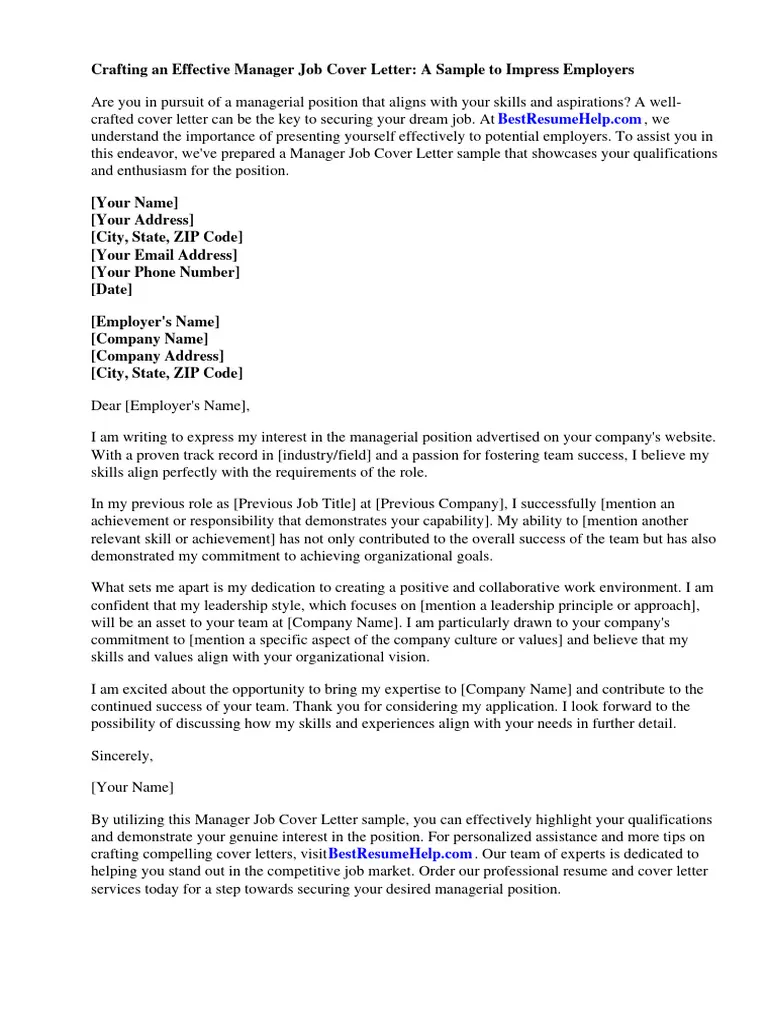
The structure of your cover letter is essential. A well-organized and easy-to-read cover letter makes a positive impression on the hiring manager. There are several key sections you should include. The structure of the cover letter should follow a logical sequence that captures the reader’s interest. Your cover letter acts as the framework. The goal is to make it easy for the hiring manager to understand who you are, what you’re looking for and how you can add value.
Formatting for Readability
Use clear formatting to enhance readability. Choose an easy-to-read font, such as Arial or Times New Roman, and maintain consistent font sizes. Use headings and bullet points to break up large blocks of text and make the information easier to digest. Keep paragraphs short and concise. Use ample white space to give the reader’s eyes a rest. Correct grammar and spelling are essential, so proofread the document several times. Your cover letter needs to be visually appealing, easy to read and reflect attention to detail. A well-formatted cover letter demonstrates your professionalism. It’s about making it easy for the reader to follow your points and find the information they need quickly.
Key Sections to Include
Your cover letter should include several key sections. Begin with a compelling introduction that grabs the reader’s attention. In the body of your letter, highlight your relevant skills, quantify your achievements, and provide specific examples of your successes. Tailor your letter to the company and position. Conclude with a strong call to action. Express your enthusiasm for the position and include your contact information. Your cover letter needs to be concise and focused. It is important that it is easy to understand. By following these key elements, you’ll maximize the impact of your cover letter.
Drafting a Compelling Introduction

Your introduction is the first chance to make an impression. Start with a strong opening sentence that captures the reader’s attention. State the position you’re applying for and briefly explain why you’re interested in the role. Briefly mention your most relevant skills or experiences. Show your passion for recruitment. The goal is to immediately grab the hiring manager’s attention. Mention any mutual connections or referrals. Keep it concise, clear, and focused. Your introduction should demonstrate your understanding of the role and your enthusiasm.
Making a Strong Conclusion
Your conclusion is the last opportunity to make a lasting impression. Recap your interest in the position. Reiterate your key qualifications and express your enthusiasm. Include a call to action. State your availability for an interview and how you can be reached. Thank the hiring manager for their time and consideration. Avoid sounding generic or cliché. Be confident and positive. Conclude by reinforcing your value. A well-crafted conclusion ensures your cover letter ends on a positive note, leaving a lasting impression.
Common Mistakes to Avoid in Recruitment Manager Cover Letters
Be aware of the common pitfalls that can undermine your cover letter. These errors can create a negative impression. This section will help ensure you make the most of your cover letter. Avoid these common mistakes to ensure your cover letter makes a positive impression.
Using Generic Language

Avoid generic language and clichés. These statements lack depth and show a lack of effort. Instead, use specific and relevant terms. Tailor your language to the role and company. Focus on your unique skills. Use concise language that demonstrates your strengths. The goal is to show, not just to tell. Focus on what sets you apart from other candidates and showcase your relevant skills.
Focusing on Responsibilities
Instead of just listing your responsibilities, emphasize your accomplishments and results. Highlight what you’ve achieved in your previous roles. Quantify your achievements with data and metrics. Describe the impact of your work. The aim is to demonstrate your abilities by sharing concrete examples. This approach showcases your capabilities and shows that you understand what the hiring manager is looking for.
Proofreading and Editing
Thorough proofreading and editing are essential. Errors in grammar and spelling can make a negative impression. Before submitting your cover letter, carefully proofread it. Check for grammatical errors. Make sure you have used the right punctuation. Ask a friend or colleague to review your cover letter. A polished cover letter is a must. The goal is to submit a document that is error-free. By proofreading and editing, you can ensure your cover letter presents you in the best possible light.