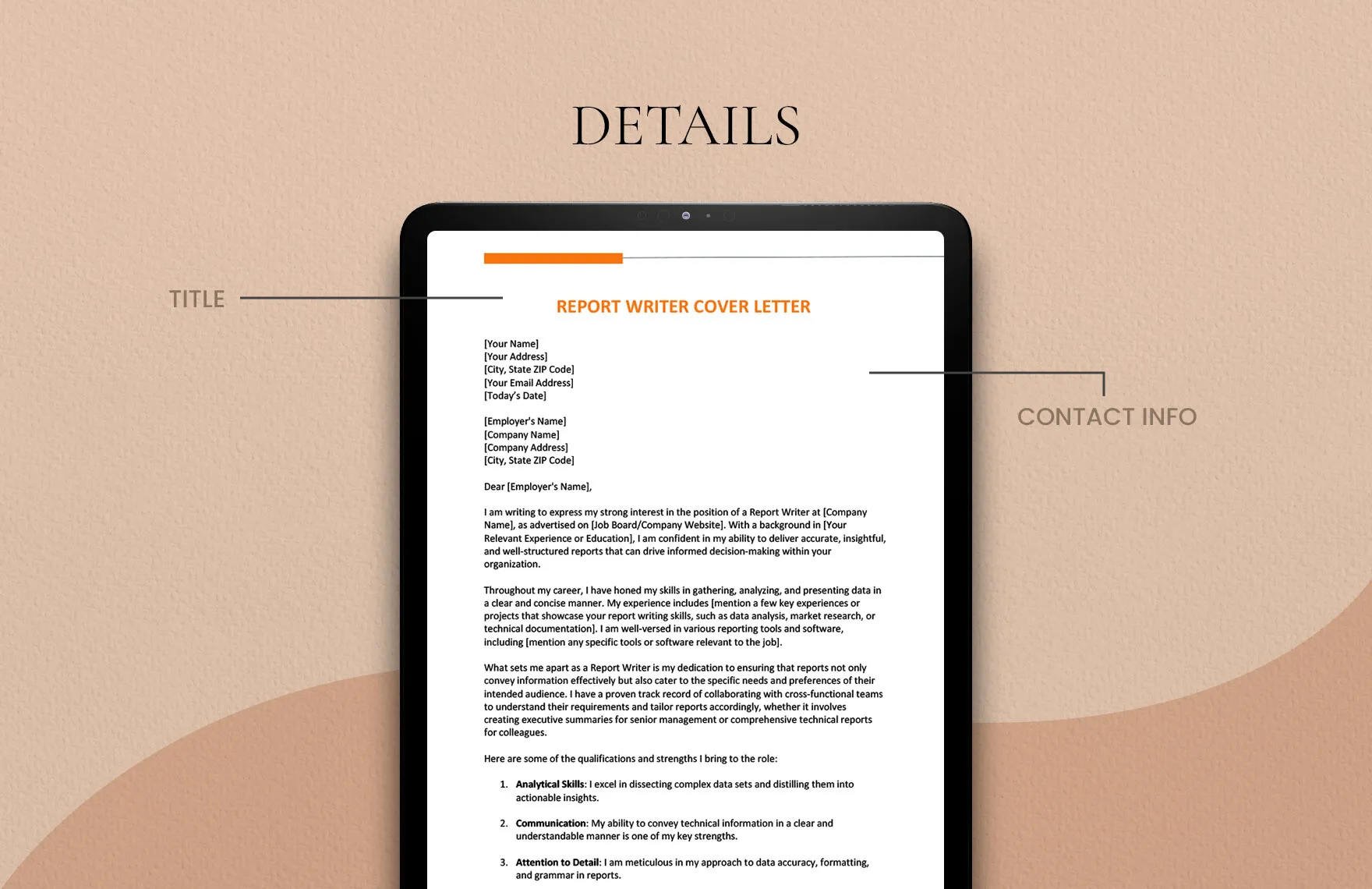
What is a Report Cover Letter
A report cover letter serves as an introduction to a report, providing context, summarizing key findings, and often highlighting the report’s purpose and scope. Unlike a resume cover letter that focuses on your qualifications, a report cover letter is tailored to the specific document you’re submitting. It is a formal document that accompanies a report, offering a concise overview of the report’s contents. It’s a crucial component of effective communication in professional and academic settings. It helps the reader understand the report’s context, significance, and the actions or insights derived from it. A well-written report cover letter enhances the report’s impact, making it more accessible and engaging for the intended audience.
Purpose of a Report Cover Letter
The primary purpose of a report cover letter is to introduce the report to the recipient and provide them with essential information to understand its content and significance. It helps establish the context of the report, explaining why it was created and what issues it addresses. It summarizes the main findings and recommendations, saving the reader time and guiding them through the key takeaways. A well-crafted cover letter ensures that the reader quickly grasps the report’s purpose and the value it offers, facilitating better understanding and more informed decision-making. It sets the stage for the report and enhances the overall impact of the presented information.
Key Components of a Report Cover Letter

A report cover letter usually includes specific key components to effectively convey its purpose. It starts with a clear identification of the report title, the recipient’s name, and the date. Following this, the letter presents the background or context of the report, explaining its purpose and the issues it addresses. The next section is a concise summary of the key findings, recommendations, and actions the report suggests. It also often includes a brief overview of the report’s methodology or approach. The closing of the letter typically expresses gratitude, offers contact information for any questions, and uses a professional closing phrase. These elements work together to ensure the report is well-received and understood.
5 Report Cover Letter Examples to Impress
Below are examples of report cover letters tailored for different types of reports. These examples show how to effectively present the key information and enhance the impact of the reports. Tailoring the cover letter to each specific report type ensures that the recipient quickly grasps the purpose and key takeaways, making the report more accessible and engaging. Each example demonstrates the essential components needed to provide a comprehensive and impactful introduction to various report formats.
Example 1 Research Report Cover Letter
This type of cover letter is used to accompany a research report. It introduces the research objectives, methods, and key findings. It helps the reader quickly grasp the study’s significance and outcomes. The structure should highlight the report’s context, including the problem investigated, research questions, and the approach taken. It should also summarize the main results and their implications, and briefly mention any limitations or areas for future study. The tone should be objective and academic, reflecting the rigorous nature of the research. The aim is to provide a succinct yet thorough overview that piques the reader’s interest and encourages them to delve deeper into the detailed report.
Key Elements of Example 1

In the Research Report Cover Letter, the key elements include a clear statement of the research’s purpose and objectives, detailing the methodology used, summarizing the main findings and their implications. This should also provide a concise summary of the research’s conclusions, emphasizing the impact of the study’s results. It is also important to acknowledge any limitations, and offer recommendations for future studies. The letter should maintain a professional tone, with precise language and a formal structure. Highlighting these elements ensures that the recipient immediately understands the research context, approach, and essential outcomes.
Example 2 Financial Report Cover Letter
This cover letter accompanies a financial report, summarizing the financial performance and position of a company or organization. It is designed to provide stakeholders with a quick overview of financial health. The letter must provide a summary of key financial metrics, such as revenue, profit, and key financial ratios, offering context to their changes. It should highlight significant financial trends and variances from the previous period. The tone must be professional and factual, using clear and concise language to ensure all stakeholders understand the financial performance. This provides a quick and accessible overview of financial information, making the financial report more understandable.
Key Elements of Example 2
Essential components of this cover letter include a summary of financial performance, including revenue, expenses, and profits, as well as key financial ratios. It should highlight any significant financial changes compared to previous periods, such as increases or decreases in revenue or significant variances. It should provide insights into the organization’s financial standing and any relevant trends or events that impacted the financial results. The letter should use clear and concise language, and maintain a professional tone appropriate for financial communications. Providing these details helps stakeholders quickly understand the financial health and performance of the organization.
Example 3 Technical Report Cover Letter

A technical report cover letter introduces a detailed technical report, often presenting complex information in a clear and concise way. The letter must give a brief overview of the technical project or system covered in the report, outlining the problem and the context. It includes a summary of the methodology used to address the technical issues and key findings. The letter should highlight the results, recommendations, and any implications for further actions. The tone should be professional and technical, using clear language and avoiding jargon, so that both technical and non-technical stakeholders can easily grasp the main points. This allows the recipient to quickly understand the technical project’s core components and outcomes.
Key Elements of Example 3
Key elements in this cover letter are a summary of the technical project, including its objectives and scope. It includes the methodology used and findings, such as the system’s performance, the challenges encountered, and the solutions implemented. It should also provide recommendations or actions based on the report’s findings. It must maintain a professional tone, and use clear, concise language that is understandable to both technical and non-technical audiences. Highlighting these components ensures the recipient can quickly understand the essence and implications of the technical project.
Example 4 Progress Report Cover Letter
This cover letter accompanies a progress report, summarizing the status of a project or activity. It provides an overview of accomplishments, challenges, and the schedule for the period. It must provide a brief overview of the project and its objectives, summarizing key accomplishments achieved during the reporting period. It should highlight any challenges or issues encountered, including the solutions implemented or planned. The letter must indicate the project’s current status compared to the planned schedule and budget. The tone should be factual, and objective, ensuring clear communication of the project’s progress. This ensures stakeholders quickly understand the current status of the project.
Key Elements of Example 4

The core elements of this cover letter include a summary of the project’s objectives and scope, the key achievements for the reporting period, and details on any challenges encountered. It should provide an overview of the project schedule and budget, including any deviations or adjustments made. The letter must include a factual tone, and clear language is used to avoid misinterpretations, and it must be concise. Highlighting these elements allows stakeholders to immediately understand the project’s status and progress.
Example 5 Business Report Cover Letter
This cover letter accompanies a business report, presenting its findings and recommendations to stakeholders. It provides a summary of the report’s purpose, methodology, and main conclusions. It offers a summary of the business report’s purpose and the context behind it. The letter must highlight the key findings and recommendations from the report, and it provides a brief overview of the methodology used. The tone should be professional, and the language should be clear and concise. This enables stakeholders to promptly comprehend the report’s objectives, findings, and suggestions.
Key Elements of Example 5
Key elements of a business report cover letter are a clear explanation of the report’s objective, detailing its purpose and the context. It must present the main findings and the primary recommendations, focusing on the report’s most important outcomes. It should also include a brief explanation of the methodology used to gather data and draw conclusions. The tone must be professional and direct, using clear and concise language to ensure easy understanding of the findings. Focusing on these elements allows stakeholders to effectively understand the report’s critical insights and recommendations.
Tips for Writing a Compelling Report Cover Letter

Writing a compelling report cover letter involves strategic planning and thoughtful execution. It is essential to understand the intended audience and tailor the letter to their level of knowledge and interests. Ensure the language is clear, concise, and professional, avoiding jargon unless the audience is familiar with it. Pay close attention to formatting and structure, as a well-organized letter enhances readability. The letter should be formatted to provide a clear and structured presentation of the information, making it easy for the recipient to follow along. Effective proofreading and editing are necessary to eliminate errors and ensure the letter is polished and professional, leaving a positive impression and facilitating effective communication.
Formatting and Structure
Proper formatting and a clear structure are crucial for effective report cover letters. The format should include the recipient’s name and title, a formal greeting, a clear subject line indicating the report’s title, and the date of submission. The structure should start with an introduction that states the report’s purpose, followed by a concise summary of the main findings, and then any recommendations or actions. Conclude with a professional closing. This structure guides the reader, making the letter easy to follow and ensuring that the key information is presented effectively. A well-formatted and structured cover letter enhances readability and conveys professionalism.
Tone and Style
The tone and style of your report cover letter should be appropriate for the audience and the nature of the report. The tone should be professional and respectful, even when the relationship with the recipient is informal. Use clear, concise language, and avoid jargon or technical terms that the recipient might not understand. The style should be consistent throughout the letter, maintaining a formal tone that matches the professionalism of the report. The overall impression should be one of competence, thoroughness, and respect for the recipient. This helps convey the importance of the report and makes the information more accessible and credible.
Proofreading and Editing

Thorough proofreading and editing are essential to ensure your report cover letter is polished and professional. Check for grammatical errors, spelling mistakes, and punctuation issues to maintain credibility. Verify that all factual information is correct, and that the names, dates, and figures are accurate. Ensure the language is clear, concise, and easy to understand, removing any unnecessary words or phrases. Proofreading also ensures the formatting is consistent, and that the tone and style are appropriate for the audience. Careful proofreading and editing demonstrate your attention to detail and commitment to quality.
Conclusion
Writing an effective report cover letter is a critical skill in professional settings. It introduces the report, summarizes its key points, and sets the stage for effective communication. By following the guidelines and examples provided, you can create compelling cover letters that highlight the importance of your reports. Mastering this skill enhances your professional communication and significantly improves the impact of your work. A well-crafted report cover letter will ensure that your audience understands the value of your work, and that it encourages further engagement with the content.