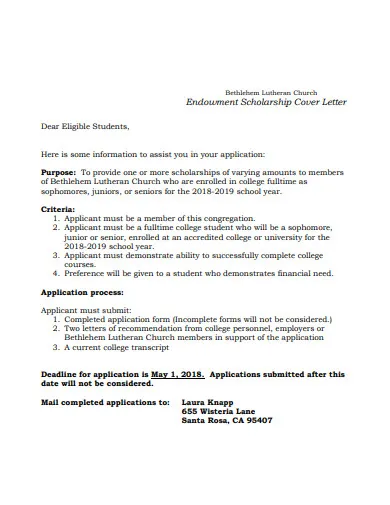
Understanding the Scholarship Application Cover Letter
A scholarship application cover letter is a crucial document that accompanies your scholarship application. It’s your chance to introduce yourself to the selection committee, highlight your qualifications, and express your interest in the scholarship. Unlike a resume or application form, the cover letter allows you to personalize your application and tell your story in a compelling way. A well-written cover letter can significantly increase your chances of being awarded a scholarship, making it a vital component of your application package. Mastering the art of crafting an effective cover letter is an essential skill for any student seeking financial assistance for their education. This guide will provide you with the knowledge and tools needed to write a standout scholarship application cover letter, increasing your chances of success.
Purpose of the Cover Letter
The primary purpose of a scholarship cover letter is to make a strong first impression and convince the scholarship committee that you are a worthy candidate. It serves as a brief introduction, a summary of your qualifications, and a demonstration of your passion for your field of study. It allows you to connect your experiences, skills, and goals with the scholarship’s criteria and values. The cover letter should not simply repeat information from your resume or application form, but rather complement it by providing context, adding personality, and showing why you deserve the scholarship. By effectively communicating your unique qualities and aspirations, you can set yourself apart from other applicants.
Key Components to Include

A strong scholarship cover letter should include several key components. Begin with a professional header that includes your contact information and the date. Address the letter to the scholarship committee or a specific person if possible. In the opening paragraph, state the purpose of your letter and mention the scholarship you’re applying for. In the body paragraphs, highlight your relevant experiences, skills, and achievements, linking them to the scholarship’s requirements and your educational goals. Explain why you are a good fit for the scholarship and what you hope to achieve in your academic and professional career. Conclude by expressing your gratitude for their consideration and reiterating your interest in the scholarship. Make sure to proofread your letter thoroughly before submitting it.
Examples and Templates
Reviewing scholarship application cover letter examples and templates can provide valuable insight into how to structure and write your own letter. Many online resources offer templates that you can adapt to your specific situation. These examples can guide you in organizing your thoughts, crafting compelling sentences, and showcasing your strengths effectively. Look for examples that align with your field of study, personal background, and the scholarship’s focus. By studying these templates, you can learn how to effectively highlight your accomplishments, express your passion, and demonstrate your suitability for the scholarship. Remember to personalize the template to reflect your unique qualities and experiences, ensuring your letter stands out.
5 Tips for a Winning Scholarship Cover Letter
Tailor Your Letter to the Scholarship

One of the most important tips for writing a winning scholarship cover letter is to tailor it specifically to each scholarship you apply for. Read the scholarship guidelines and requirements carefully, and address them directly in your letter. Show the committee that you understand the scholarship’s mission and values, and explain how your goals and experiences align with them. Mentioning specific aspects of the scholarship program and demonstrating your genuine interest in their objectives will help you stand out from generic applications. Customizing your letter demonstrates that you have taken the time to research the scholarship and are truly committed to its goals.
Highlight Relevant Experiences and Skills
Focus on the experiences and skills that are most relevant to the scholarship and your academic goals. These could include academic achievements, extracurricular activities, volunteer work, leadership roles, or any other experiences that showcase your capabilities. Explain how these experiences have prepared you for success in your field of study and how they demonstrate your commitment to excellence. Use specific examples to illustrate your skills, such as time management, problem-solving, teamwork, or communication. By highlighting relevant experiences and skills, you can demonstrate your potential to succeed in your academic and professional pursuits.
Showcase Your Achievements
Don’t be afraid to showcase your achievements in your scholarship application cover letter. Provide specific examples of your accomplishments and quantify them whenever possible. For example, instead of saying you improved sales, state that you increased sales by a certain percentage. Highlight any awards, honors, or recognition you have received. If you have overcome any challenges or obstacles, briefly explain them and how you learned from the experience. Showcasing your achievements demonstrates your dedication, perseverance, and ability to succeed, making you a more attractive candidate for the scholarship. Remember to focus on achievements that align with the scholarship’s criteria and values.
Express Your Financial Need

If the scholarship is need-based, clearly and honestly express your financial need in your cover letter. Explain why you require financial assistance and how the scholarship will help you achieve your educational goals. You can briefly mention your family’s financial situation, any other sources of funding you are relying on, and the impact the scholarship will have on your ability to pursue your studies. Be sincere and avoid making the letter sound like a sob story. Focus on the positive impact the scholarship will have on your education and future career. Demonstrating your financial need appropriately is crucial for need-based scholarships.
Proofread and Edit Carefully
Proofreading and editing your scholarship application cover letter is essential to ensure that it is free of errors and presents you in the best possible light. Carefully check for any grammatical errors, spelling mistakes, or typos. Ensure that your sentences are clear, concise, and well-structured. Have a friend, family member, or career counselor review your letter to provide feedback and catch any mistakes you may have missed. A polished cover letter demonstrates professionalism and attention to detail, increasing your chances of making a positive impression on the scholarship committee. Taking the time to proofread and edit can make a significant difference in the quality of your application.
Formatting Your Cover Letter for Success
Choosing the Right Font and Style

The appearance of your cover letter contributes to the overall impression you make. Choose a professional and easy-to-read font, such as Times New Roman, Arial, or Calibri, with a font size between 10 and 12 points. Use a clean and simple layout, with clear headings, bullet points (if appropriate), and adequate spacing between paragraphs. Avoid using excessive formatting or distracting elements that could detract from your content. The goal is to create a visually appealing and easy-to-read letter that showcases your professionalism and attention to detail. Ensuring a visually appealing format makes the reading process easier and more enjoyable for the committee.
Proper Header and Footer
Include a professional header with your full name, contact information (phone number, email address), and the date. If the scholarship specifies a particular format for the header, follow those instructions. The header should be placed at the top of the page, typically left-aligned. While a footer isn’t always required, you might include page numbers if the letter is exceptionally long. Ensure your header and footer are consistent with the overall professionalism of your letter. A well-formatted header ensures that the committee can easily identify and contact you.
Optimal Length
Keep your scholarship application cover letter concise and to the point. The ideal length is typically one page, although some scholarships may allow for a slightly longer letter. Focus on the most important information and avoid unnecessary details. Use clear and concise language to convey your message effectively. Structure your letter logically, with a clear introduction, body paragraphs that highlight your key qualifications, and a brief conclusion. Make every word count and ensure your letter is easy to read and understand. A well-written, concise letter shows respect for the committee’s time.
Frequently Asked Questions (FAQ)

What is the ideal length for a scholarship cover letter?
The ideal length for a scholarship cover letter is typically one page. It should be long enough to provide sufficient detail about your qualifications and goals but concise enough to keep the reader engaged. Always check the specific scholarship guidelines, as some may have length restrictions or preferences.
Should I include references in my cover letter?
Generally, you don’t need to include references directly in your cover letter. References are usually submitted separately as part of your application. However, you can mention that you have references available upon request. Ensure you have a separate list of references ready if the scholarship requires it.
What should I do if I don’t have a lot of experience?

If you lack extensive experience, focus on other aspects of your application, such as your academic record, extracurricular activities, volunteer work, or personal qualities. Highlight your potential, enthusiasm, and willingness to learn. Emphasize any skills or experiences you do have, even if they are not directly related to your field of study. Tailor your letter to showcase what makes you a strong candidate despite your limited experience.