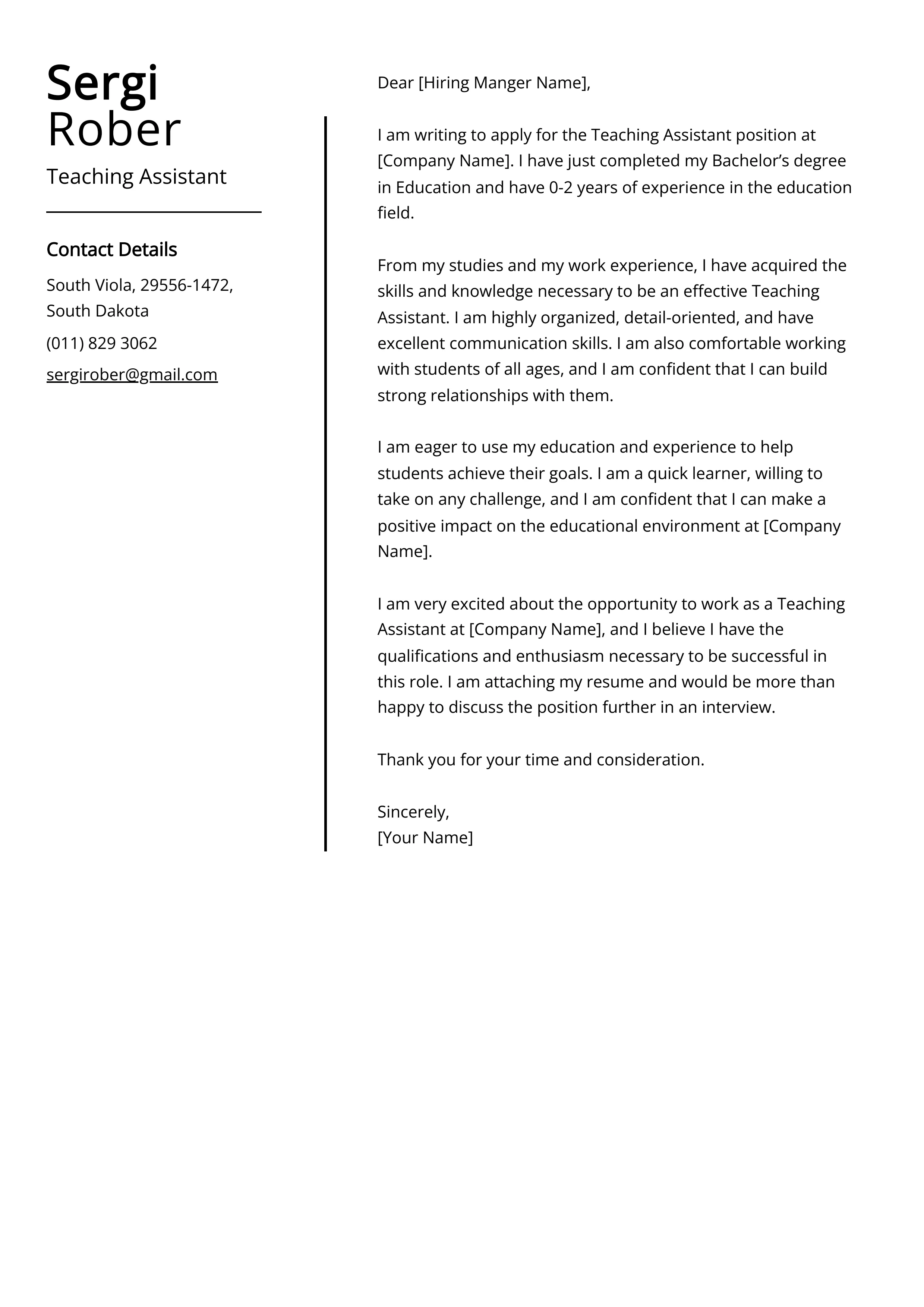
A well-crafted cover letter is your first introduction to a potential employer, and for a Teacher Assistant role, it’s crucial. It’s your opportunity to showcase your skills, experience, and passion for education. To stand out from the competition and increase your chances of landing an interview, you need a cover letter that goes beyond the basics. This guide will provide you with five essential tips to help you craft a compelling cover letter that grabs the attention of hiring managers and sets you apart from other applicants. From highlighting your key skills to tailoring your letter to the specific job, these tips will empower you to create a cover letter that gets you noticed.
Highlighting Your Teacher Assistant Skills
Your cover letter should immediately highlight the skills that make you a strong candidate. Focus on the abilities that directly relate to the role of a Teacher Assistant. This includes both hard skills and soft skills. Hard skills might involve proficiency in using educational software, preparing classroom materials, or assisting with lesson planning. Soft skills, such as communication, organization, and patience, are equally, if not more, important in this role. Demonstrating a blend of these skills will show that you are a well-rounded candidate who can effectively support both the teacher and the students. Always provide specific examples of how you have utilized these skills in previous experiences.
Classroom Management Prowess
Classroom management is a cornerstone of a Teacher Assistant’s responsibilities. Your cover letter needs to clearly articulate your ability to help maintain a positive and productive learning environment. Mention any experience you have in managing student behavior, organizing classroom activities, or assisting with transitions between lessons. Specific examples are key here. For example, you could write something like, ‘In my previous role, I successfully implemented a reward system that improved student participation by 20%.’ or ‘I have experience in creating and maintaining organized classroom spaces that facilitated a smoother learning experience for all students.’ Highlighting your ability to assist the lead teacher in managing the classroom dynamics is essential.
Communication Skills

Effective communication is vital for a Teacher Assistant. Your cover letter must highlight your ability to communicate clearly and respectfully with students, teachers, and parents. Include examples of how you’ve communicated in various settings, such as explaining concepts to students, providing feedback, or relaying information to parents. Mention your ability to listen actively and understand the needs of others. Perhaps you’ve helped translate for non-English speaking parents, or helped to coordinate communications between teachers and families. Demonstrating strong written and verbal communication skills is crucial for a Teacher Assistant’s success in supporting the educational process and fostering positive relationships within the school community. This includes the ability to communicate with children of different ages and abilities.
Adaptability and Flexibility
The role of a Teacher Assistant is often dynamic, requiring you to adapt quickly to changing situations. Your cover letter should reflect your ability to be flexible and adjust to new challenges. Highlight instances where you’ve demonstrated adaptability, such as covering for a teacher unexpectedly, handling classroom emergencies, or modifying activities to meet student needs. Mention your willingness to learn new technologies or teaching methods. Explain how you can think on your feet and remain calm under pressure. Adaptability also includes the capacity to work with diverse groups of students with different learning styles. Showing that you are prepared for whatever the day might bring is a significant advantage in this field.
Emphasizing Relevant Experience
Your cover letter should focus on experience that directly relates to the Teacher Assistant role. This means highlighting past positions, volunteer work, or internships where you’ve worked with children or in an educational setting. Even if your experience isn’t in a formal teaching role, consider how your previous responsibilities align with the needs of a Teacher Assistant. For example, experience in childcare, tutoring, or mentoring programs can all be valuable. Quantify your accomplishments whenever possible by using numbers and data to show the impact of your work. This section is your opportunity to demonstrate you’ve already got the skills.
Showcasing Volunteer Work

If you have volunteer experience working with children, be sure to include it in your cover letter. Volunteer work demonstrates your commitment to education and your willingness to invest your time and energy in supporting young people. Describe the nature of your volunteer activities, such as tutoring, assisting with extracurricular activities, or helping in a classroom setting. Highlight any skills you developed or utilized during your volunteer experience, such as patience, communication, or organizational skills. Even if your volunteer experience is limited, it shows initiative and a passion for education that can be appealing to employers. Tailor your descriptions to relate your volunteer work to the skills needed in a Teacher Assistant position, creating a strong link.
Highlighting Educational Background
Your educational background is a key component of your cover letter, especially when applying for a Teacher Assistant role. Provide information about your relevant degrees, certifications, and any coursework that pertains to education or child development. If you have completed any training programs, such as those related to early childhood education or special education, be sure to mention them. Also, mention any courses or workshops you’ve taken that have helped you develop teaching skills, such as child psychology or classroom management. If you are currently pursuing a degree, be sure to state your expected graduation date. Your educational background helps to establish your credentials and demonstrates your preparation for the role.
Tailoring Your Cover Letter
One of the most crucial tips is to customize your cover letter for each job application. A generic cover letter will not stand out. Take the time to research the specific school or district, and tailor your letter to their particular needs and values. This shows that you’ve taken the time to understand what the employer is looking for and are genuinely interested in the position.
Researching the School or District

Before you write your cover letter, thoroughly research the school or district where you are applying. Visit their website, read their mission statement, and learn about their values and programs. Does the school have a focus on a particular teaching method? Are they known for their special education programs, or their dedication to technology? Knowing this information will help you tailor your cover letter to address their specific needs. Referencing specific programs or initiatives within your letter will show that you are genuinely interested in joining their team. This demonstrates that you are thoughtful in your application process.
Referencing the Job Description
Carefully review the job description for the Teacher Assistant position and use it as a guide for your cover letter. Identify the key skills and qualifications the employer is seeking and then address them directly in your letter. Use the same keywords and phrases from the job description to show that you possess the necessary attributes. This approach demonstrates your understanding of the role and increases your chances of getting an interview. When possible, provide specific examples from your past experiences that prove you possess these skills. Use the job description as a roadmap for a tailored and effective cover letter.
Formatting and Presentation
The formatting and presentation of your cover letter are just as important as its content. A well-formatted cover letter is easy to read and visually appealing. Make sure your cover letter is concise, well-organized, and free of errors. A professional-looking cover letter can make a great first impression on a potential employer and help make you stand out among other applicants. Poorly formatted cover letters can be easily overlooked. This is your chance to make a positive and professional first impression.
Using a Professional Tone

Your cover letter should maintain a professional tone throughout. Use formal language and avoid slang or casual expressions. Keep your writing concise and to the point, and avoid overly lengthy sentences or paragraphs. Address the hiring manager by name if possible, and use a professional salutation, such as ‘Dear Mr./Ms./Mx. [Last Name]’. The tone of your letter should reflect respect and a clear understanding of professional workplace communication. Always proofread your letter carefully for any spelling, grammar, or punctuation errors. A polished, professional cover letter demonstrates that you are detail-oriented and committed to excellence.
Proofreading and Editing
Proofreading and editing are critical steps to ensure your cover letter is free from errors. Typos and grammatical mistakes can undermine your credibility, so take the time to carefully review your letter before submitting it. Read your cover letter aloud to catch any awkward phrasing or areas that need improvement. Consider having a friend, family member, or career counselor review your letter as well. Fresh eyes can often spot errors that you might miss. Ensure the layout is easy to read, with appropriate margins, font size, and spacing. A well-proofread and edited cover letter demonstrates your attention to detail and professionalism.
Call to Action and Closing
Your cover letter should end with a clear call to action, such as requesting an interview. Express your enthusiasm for the position and reiterate your interest in the school or district. Thank the hiring manager for their time and consideration. Providing your contact information in a clear and accessible format, including your phone number and email address is also important. A strong closing statement shows your eagerness to move forward in the application process. Closing your cover letter appropriately leaves the employer with a positive impression of you as a potential candidate and gives them the next step.
By following these five tips, you can create a compelling cover letter that highlights your skills and experience and increases your chances of landing a Teacher Assistant job. Good luck with your application!