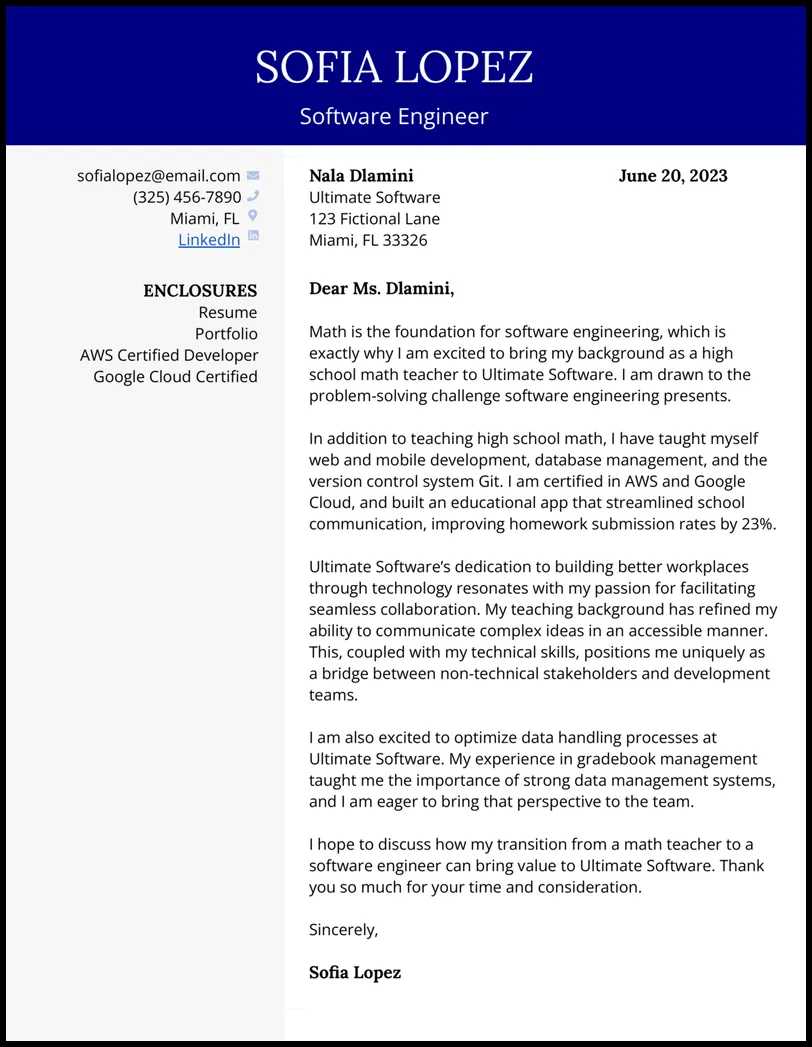
Why a Teacher Career Change?
Embarking on a career change can be a significant decision, especially for teachers who have dedicated their time to shaping young minds. Several factors drive educators to explore new professional avenues, including burnout from the demanding teaching environment, limited opportunities for advancement within the education system, or a desire for higher earning potential. The teaching profession often involves long hours, emotional strain, and administrative burdens that can lead to dissatisfaction. Furthermore, teachers may seek roles that allow them to utilize their skills in different contexts, providing new challenges and opportunities for professional growth. Recognizing the reasons behind this shift is the first step in crafting a compelling career change cover letter that highlights your adaptability and motivation to transition into a new field.
Understanding Your Transferable Skills
One of the most crucial aspects of a successful career change is identifying and articulating your transferable skills. As a teacher, you have honed a diverse set of abilities that are valuable in numerous industries. These skills include communication, leadership, organization, problem-solving, and the ability to manage and motivate others. Teachers are experts in explaining complex concepts, adapting to diverse learning styles, and providing constructive feedback, all of which are highly sought after in various professional settings. Recognizing how these skills apply to your target roles is key. Start by creating a detailed list of the responsibilities you’ve held in your teaching career and then map these to the requirements of the new job you are applying for, to make your cover letter stand out.
Identifying Key Skills

To effectively highlight your skills in your cover letter, focus on the abilities most relevant to the job you are applying for. For instance, if you’re applying for a project management role, emphasize your organizational skills, ability to meet deadlines, and experience in managing multiple tasks. If you are targeting a training and development position, spotlight your presentation skills, ability to create engaging content, and experience in assessing performance. The key is to tailor your skills to match the requirements of the job description. Use keywords from the job posting to demonstrate that you possess the specific qualifications the employer is seeking. By aligning your skills with the job requirements, you’ll significantly increase your chances of getting noticed.
Highlighting Achievements
Quantifying your achievements is a powerful way to demonstrate your value to potential employers. Instead of simply stating that you are a good communicator, provide specific examples of how you’ve used communication skills to achieve positive outcomes. For instance, you might mention how you improved student test scores by a certain percentage or how you successfully implemented a new curriculum. Include numbers, statistics, and specific examples whenever possible to support your claims. Achievements may also include your ability to build and maintain a positive classroom environment, mentor new teachers, or lead professional development workshops. Highlighting achievements provides concrete evidence of your capabilities and helps employers understand the value you can bring to their organization.
Crafting Your Teacher Career Change Cover Letter
Your cover letter serves as your introduction to a potential employer, and it’s your opportunity to make a strong first impression. When crafting your cover letter, it is important to take a strategic approach. Begin by researching the company and the specific role you are applying for. Understand the company’s values, mission, and the challenges they are facing. This will help you tailor your cover letter to their specific needs and demonstrate your genuine interest in the position. Make sure to address your career change directly and explain your reasons for transitioning, while also showcasing how your transferable skills align with the job requirements. By taking a strategic approach, you will create a cover letter that is both compelling and persuasive.
Header and Contact Information

Your cover letter should always include a professional header with your contact information, including your name, address, phone number, and email address. Make sure to use a professional email address and ensure it’s updated. This information should be at the top of the page and easy to find. Also, include the date and the recipient’s name, title, and company address. If you know the hiring manager’s name, address the letter directly to them, which is a great way to show your initiative and attention to detail. This small touch can demonstrate your professionalism and increase your chances of your cover letter being read. Double-check all information for accuracy to avoid any errors that could hinder your application.
Personalized Greeting
A personalized greeting makes your cover letter stand out from generic applications. Instead of starting with a generic greeting like “To Whom It May Concern,” research the hiring manager’s name and address the letter directly to them. If you can’t find the hiring manager’s name, try to address the letter to the specific department or role, such as “Dear Hiring Manager, Marketing Department.” This personalized approach shows that you’ve done your research and that you’re genuinely interested in the position. It also indicates a level of professionalism and attention to detail. Take this opportunity to express your enthusiasm for the role and the company, which will further engage the reader from the very beginning.
Opening Paragraph
Your opening paragraph should grab the reader’s attention and clearly state the purpose of your letter. Mention the specific position you are applying for and how you learned about the opportunity. Briefly state your interest in the role and the company. This is your chance to create a strong first impression, so make sure it’s impactful. In this paragraph, you should also address your career change directly and explain your motivation for transitioning. Avoid vague language. Be clear and concise about why you are seeking a new career path. State your intentions and what you hope to bring to the table.
Body Paragraphs for your Cover Letter

The body paragraphs are the core of your cover letter, where you highlight your skills and experiences. These paragraphs should expand on the skills you’ve identified as transferable, providing specific examples to demonstrate how you’ve used these skills in your teaching career. Tailor your content to match the requirements of the job. Emphasize your accomplishments and quantify your achievements whenever possible. If the job description calls for strong communication skills, provide examples of how you have successfully communicated with students, parents, or colleagues. If it asks for leadership skills, describe instances where you have led projects or initiatives, detailing the results. Using strong action verbs will also make your letter more compelling and impactful.
Showcasing Your Skills
Focus on showcasing your relevant skills and how you’ve used them effectively. Use examples from your teaching experience to illustrate these skills. For instance, you can describe how you’ve managed a classroom of diverse learners, resolved conflicts, or created engaging lesson plans. Highlight your abilities in communication, organization, and problem-solving, as these skills are highly transferable to other industries. Make sure to align your skills with the requirements outlined in the job description. Use keywords and phrases from the job posting to demonstrate you possess the necessary qualifications. This alignment helps the hiring manager see how your experience directly relates to the new role you are seeking. Provide specific examples of your achievements to support your claims. Quantify your results whenever possible, as it shows the tangible impact of your skills.
Highlighting Your Accomplishments
Use the body of your cover letter to highlight your achievements and how they translate to your desired role. Instead of simply listing your responsibilities, focus on the outcomes and results you’ve achieved in your teaching career. For example, describe how you have improved student outcomes, implemented successful educational programs, or received positive feedback from parents and colleagues. Use the STAR method (Situation, Task, Action, Result) to structure your examples and make them clear and impactful. Briefly describe the situation, outline the task, detail the actions you took, and then, explain the results of your actions. This helps you to provide context and allows the reader to understand your impact and capabilities, making your application more memorable and effective.
Closing Your Cover Letter

The closing of your cover letter should reiterate your interest in the position and express your enthusiasm for the opportunity. Include a clear call to action, such as requesting an interview or offering to provide any additional information. Thank the hiring manager for their time and consideration. End your letter professionally by using a formal closing like “Sincerely” or “Best regards,” followed by your name. Before submitting, proofread your closing paragraph carefully to ensure it is free of errors and reflects your professionalism. This final impression should be a positive one and leave the reader with a clear understanding of your interest and qualifications for the job.
Proofreading and Editing
Proofreading and editing are crucial steps in the cover letter writing process, and these can significantly impact your chances of landing a job. Errors in grammar, spelling, or punctuation can detract from your credibility and professionalism. Before submitting your cover letter, thoroughly review it for any mistakes. Read it multiple times and read it out loud to check the flow and clarity of your writing. Ask a friend or colleague to review your cover letter and provide feedback. They may catch errors that you missed. Make sure all the details are correct, from the company name to the hiring manager’s name. Ensure that the tone is professional and appropriate for the specific role and industry you are targeting. A well-proofread cover letter will demonstrate your attention to detail and commitment to presenting yourself in the best possible light.
Tailoring Your Cover Letter
Tailoring your cover letter for each job application is a must. Avoid using a generic cover letter that you send to every company. Instead, customize your letter to the specific requirements of each role and company. Research the company’s mission, values, and the specific responsibilities of the position. Use the job description as a guide to identify the key skills and qualifications the employer is looking for. Then, use your cover letter to demonstrate how your experience and skills align with those requirements. If the job posting emphasizes teamwork, highlight your experience collaborating with colleagues or leading team projects. Tailoring shows that you are genuinely interested in the position and that you have the skills and experience needed to succeed, increasing your chances of getting an interview.
Resources and Further Assistance

There are many resources available to help you write a compelling cover letter and manage your career change. Career counselors can provide personalized guidance, including resume and cover letter writing assistance, interview preparation, and job search strategies. Online resources, such as resume builders, cover letter templates, and career advice websites, can help you tailor your application. Consider reaching out to professional organizations in your target field. Their websites will also often offer career resources or job boards. Networking with professionals can also be very beneficial to getting advice and insight into the industry. By taking advantage of available resources, you can increase your chances of landing a job that aligns with your career goals.