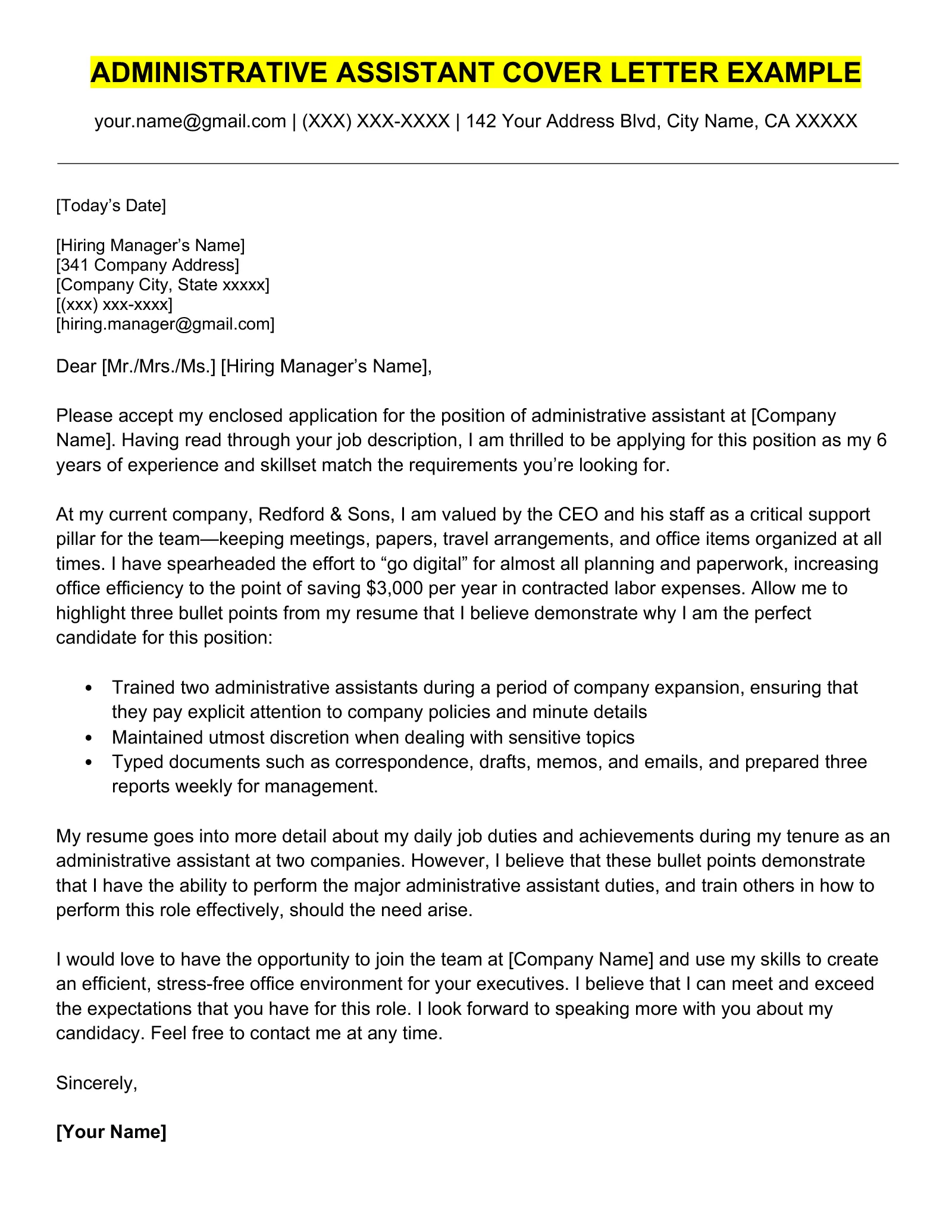
Top 7 Cover Letter Examples for Admin Assistant Jobs
Landing an administrative assistant position requires more than just a stellar resume; it demands a compelling cover letter. Your cover letter is your first opportunity to make a positive impression and showcase your suitability for the role. This guide provides seven distinct cover letter examples, each tailored to highlight different strengths and approaches, alongside essential tips to help you craft the perfect application. Whether you’re a seasoned professional or just starting out, these examples will give you the tools you need to stand out from the competition. Mastering the art of the cover letter is crucial in today’s competitive job market, and by understanding the different approaches, you can significantly increase your chances of securing an interview and ultimately, your dream job. Let’s dive in and explore how you can create a cover letter that gets noticed!
Understanding the Role of an Administrative Assistant
Administrative assistants play a pivotal role in the smooth operation of any office. They are the gatekeepers of information, the organizers of chaos, and the friendly faces that keep everything running efficiently. Their responsibilities are diverse, ranging from managing schedules and correspondence to handling sensitive information and coordinating office activities. Administrative assistants support executives, managers, and other staff members, ensuring that their daily tasks are managed effectively. To create an impactful cover letter, it’s essential to understand the core functions and the value administrative assistants bring to the table. This understanding allows you to highlight the most relevant skills and experiences to match the specific job requirements and demonstrate your capability to excel in the role.
Key Responsibilities of Administrative Assistants

The key responsibilities of administrative assistants typically include managing calendars, scheduling meetings, making travel arrangements, and preparing reports and presentations. They often handle incoming and outgoing communications, such as phone calls and emails, ensuring that all communications are properly routed and responded to promptly. They may also be responsible for maintaining office supplies, coordinating with vendors, and managing records and files. In many organizations, administrative assistants act as the first point of contact, greeting visitors, handling inquiries, and providing general administrative support to various departments. The ability to multitask, prioritize tasks effectively, and maintain confidentiality are essential to fulfilling these responsibilities successfully.
Essential Skills for Administrative Assistants
Administrative assistants need a diverse set of skills to excel in their roles. Strong organizational and time-management skills are crucial for managing multiple tasks and deadlines effectively. Excellent communication skills, both written and verbal, are essential for interacting with colleagues, clients, and vendors. Proficiency in computer software, including Microsoft Office Suite (Word, Excel, PowerPoint, Outlook), is typically required. Attention to detail is vital for tasks such as proofreading documents and managing data accurately. Additionally, interpersonal skills and a professional demeanor are important for creating a positive work environment. These skills should be highlighted in your cover letter to demonstrate your readiness to take on the responsibilities of the job.
Cover Letter Essentials for Admin Assistants
A well-crafted cover letter is your chance to shine and convince the hiring manager that you’re the best candidate. The cover letter is not a rehash of your resume but rather an opportunity to elaborate on your skills, experiences, and how they align with the job requirements. Start with a professional header that includes your contact information and the date, followed by the recipient’s information. Address the hiring manager by name whenever possible; it shows you’ve done your research and care about the role. Your opening paragraph should capture attention, state your purpose, and mention the position you are applying for. The body of the letter should showcase your relevant skills and experience, and the closing paragraph should express your enthusiasm and include a call to action.
Formatting Your Cover Letter for Impact

Formatting your cover letter appropriately is crucial for making a positive impression. Use a clear, professional font such as Times New Roman, Arial, or Calibri, with a font size between 10 and 12 points. Ensure there’s ample white space to avoid a cluttered appearance; use single spacing within paragraphs and double spacing between paragraphs. Keep your cover letter concise, ideally within one page. Use bullet points or numbered lists to highlight key skills and accomplishments, making it easy for the hiring manager to scan and grasp the most relevant information quickly. Proper formatting shows your attention to detail and professionalism, reflecting positively on your candidacy. Ensure your document is well-organized and easy to read.
Highlighting Relevant Skills and Experience
When describing your skills and experience, be specific and provide concrete examples. Don’t just list your skills; demonstrate them through your accomplishments. For example, instead of saying you have ‘strong organizational skills,’ describe how you ‘successfully managed multiple projects simultaneously, meeting deadlines and exceeding expectations.’ Use keywords from the job description to show that you are a perfect match for the role. Quantify your achievements whenever possible; for example, ‘Improved office efficiency by 15% by implementing a new filing system.’ By providing tangible evidence of your abilities, you significantly increase the impact of your cover letter and make a compelling case for your candidacy.
Cover Letter Example 1 The Skills-Focused Approach
This example is for candidates with a strong skill set but perhaps limited experience. The focus is on demonstrating proficiency in essential administrative skills. The skills-focused cover letter should open by highlighting your core administrative skills such as organizational skills, proficiency in Microsoft Office, and communication skills. Give examples of how you’ve used these skills in previous roles or projects. For example, you might mention streamlining office processes or effectively managing a high volume of emails. This approach is particularly beneficial if you’re transitioning careers or applying for an entry-level role, as it emphasizes your transferable abilities. Use the job description to pinpoint the key skills the employer is seeking and align your skills with their needs.
Cover Letter Example 2 The Experience-Driven Approach

This approach is ideal for seasoned administrative professionals. Your letter should begin by highlighting your years of experience and the industries you have served. Showcase your track record of achievements and emphasize your experience in relevant administrative tasks such as calendar management, travel coordination, and project management. Include specific achievements to make your application more credible. Quantify your impact whenever possible by using metrics such as cost savings or efficiency improvements. This approach is most effective when applying for a position that requires experience or when seeking a senior administrative role. Use your extensive background to build a compelling narrative, highlighting your key accomplishments and how they align with the employer’s needs. Be concise and ensure your most recent experience is highlighted.
Cover Letter Example 3 The Education-Focused Approach
If you have relevant educational qualifications, this approach will be helpful. Begin by mentioning your degree or certifications, and then highlight how your education has prepared you for an administrative role. Provide real-world examples of how your education helped you manage various administrative functions. The focus should be on how your education aligns with the requirements of the job. Include any internships, projects, or coursework that are relevant to the role. This approach is beneficial if you are a recent graduate or someone who has obtained specific qualifications, such as a certificate in office administration or a related field. Highlight any skills you have acquired during your education.
Cover Letter Example 4 The Results-Oriented Approach
This is a highly effective approach for administrative roles. Focus on concrete achievements and quantifiable results you have obtained in past roles. Instead of merely listing responsibilities, describe specific actions you took and the positive outcomes achieved. Use metrics to highlight your accomplishments, such as cost savings, improved efficiency, or enhanced office organization. For example, you could mention that you ‘reduced office supply costs by 10% by negotiating with vendors.’ This approach clearly demonstrates your ability to deliver results and adds significant value to your application. Be sure to select achievements that are directly relevant to the requirements of the role you are applying for and that resonate with the company’s objectives.
Cover Letter Example 5 The Customized Approach

In this approach, the candidate should demonstrate familiarity with the company and tailor the cover letter to the specific needs of the employer. Research the company’s mission, values, and recent activities. Explain how your skills and experience align with the organization’s goals and what you can bring to the table. Customize your cover letter to reflect the unique requirements of the role and the company culture. Personalize your letter with information about the company’s culture or recent projects. The goal is to show that you’ve taken the time to understand the company and are genuinely interested in the position. By demonstrating your specific knowledge of the organization and its needs, you can make your application stand out from the rest.
Cover Letter Example 6 The Problem-Solving Approach
This approach focuses on showcasing your ability to solve problems that arise in administrative roles. Identify a problem you successfully resolved in a previous role and describe the situation, your actions, and the positive outcome. Use this opportunity to demonstrate your analytical skills and your resourcefulness. Explain how you used your problem-solving skills to improve efficiency, reduce costs, or enhance office operations. Highlight your ability to think critically and find effective solutions. This approach works very well if the job description emphasizes the need for a proactive individual. The ability to anticipate and solve problems effectively is a highly valuable asset in administrative roles.
Cover Letter Example 7 The Enthusiastic Approach
This approach is perfect for demonstrating your passion for the role and your eagerness to contribute to the team. Begin by expressing your enthusiasm for the position and the company. Highlight how your skills and experience align with the company’s values and mission. Show your genuine interest in the role by explaining why you are excited about the opportunity to work there. Be sure to make your enthusiasm authentic and professional. Enthusiasm is infectious, and employers are more likely to hire someone who is clearly passionate about the job. Let your excitement shine through in your writing. Ensure your enthusiasm complements your skills and experience.
Tailoring Your Cover Letter for Each Job

Do not use a generic cover letter. Always customize your cover letter for each job you apply for. Review the job description carefully, highlighting the required skills, experiences, and qualifications. Then, tailor your letter to reflect those requirements. Modify your letter to address the specific needs of the role and emphasize the skills that are most relevant to the employer. Personalize your cover letter with information about the company and the specific role. Customize it to make your application more compelling. The more you personalize your cover letter, the more likely it is to resonate with the hiring manager. Customization demonstrates to the hiring manager that you have taken the time to understand the specific needs of the role and the organization.
Researching the Company and Its Needs
Thoroughly research the company before you start writing your cover letter. Visit the company website, review their social media profiles, and read articles about their recent activities. Understand the company’s mission, values, and goals to align your cover letter with the organization’s culture and needs. Identify specific projects or initiatives the company is involved in and highlight how your skills can contribute to their success. Tailor your cover letter to demonstrate your knowledge of the company and your genuine interest in working for them. By demonstrating that you have taken the time to research and understand the organization, you show the employer that you are highly motivated to contribute to their success.
Using Keywords to Match Job Descriptions
Carefully review the job description, and identify the key skills and qualifications the employer is seeking. Incorporate these keywords throughout your cover letter and resume. This will help your application get noticed by applicant tracking systems (ATS) used by many companies. By using the exact language from the job description, you demonstrate that you have the required qualifications and are a good fit for the role. Strategically integrate the keywords into your description of your skills, experiences, and accomplishments. This will increase the likelihood of your application being selected for an interview. Be mindful to use the keywords in a natural way, to avoid keyword stuffing, which could negatively impact your cover letter’s readability.
Proofreading and Editing Your Cover Letter

Proofreading is a critical step in the application process. Proofread your cover letter thoroughly for any typos, grammatical errors, and formatting mistakes. Use spell-check and grammar-check tools, but don’t rely on them completely. They may not catch every error. Ask a friend, family member, or career advisor to review your cover letter and provide feedback. Fresh eyes can often catch errors that you might have missed. Pay attention to the tone and clarity of your writing, making sure your message is clear and concise. Ensure you have included the correct contact information and the date. A polished and error-free cover letter shows professionalism and attention to detail, which is extremely important.
Common Mistakes to Avoid in Your Cover Letter
Avoid making common mistakes that can undermine your application. Do not use a generic cover letter; always tailor it to the specific job. Avoid typos and grammatical errors, which can damage your credibility. Do not exceed one page in length; keep your cover letter concise and focused. Avoid being too vague. Be specific when describing your skills and accomplishments. Do not list the same information as your resume. Instead, elaborate on your skills and experiences, and provide context. Do not include negative comments about your previous employers or colleagues. Keep your tone positive and professional. Avoid the use of jargon and acronyms that the hiring manager may not understand. Always proofread for errors before submitting.
Ensuring Professionalism and Clarity
Maintain a professional tone throughout your cover letter. Use formal language and avoid slang or informal expressions. Ensure your writing is clear and easy to understand. Use concise sentences and paragraphs. Use a clear and professional font and format. Proofread carefully to ensure your cover letter is free from errors. Keep your focus on the employer’s needs, showcasing how your skills and experience align with the job requirements. By following these guidelines, you can create a cover letter that reflects positively on you and increases your chances of securing an interview. A professional and well-written cover letter is your first step toward landing the job.