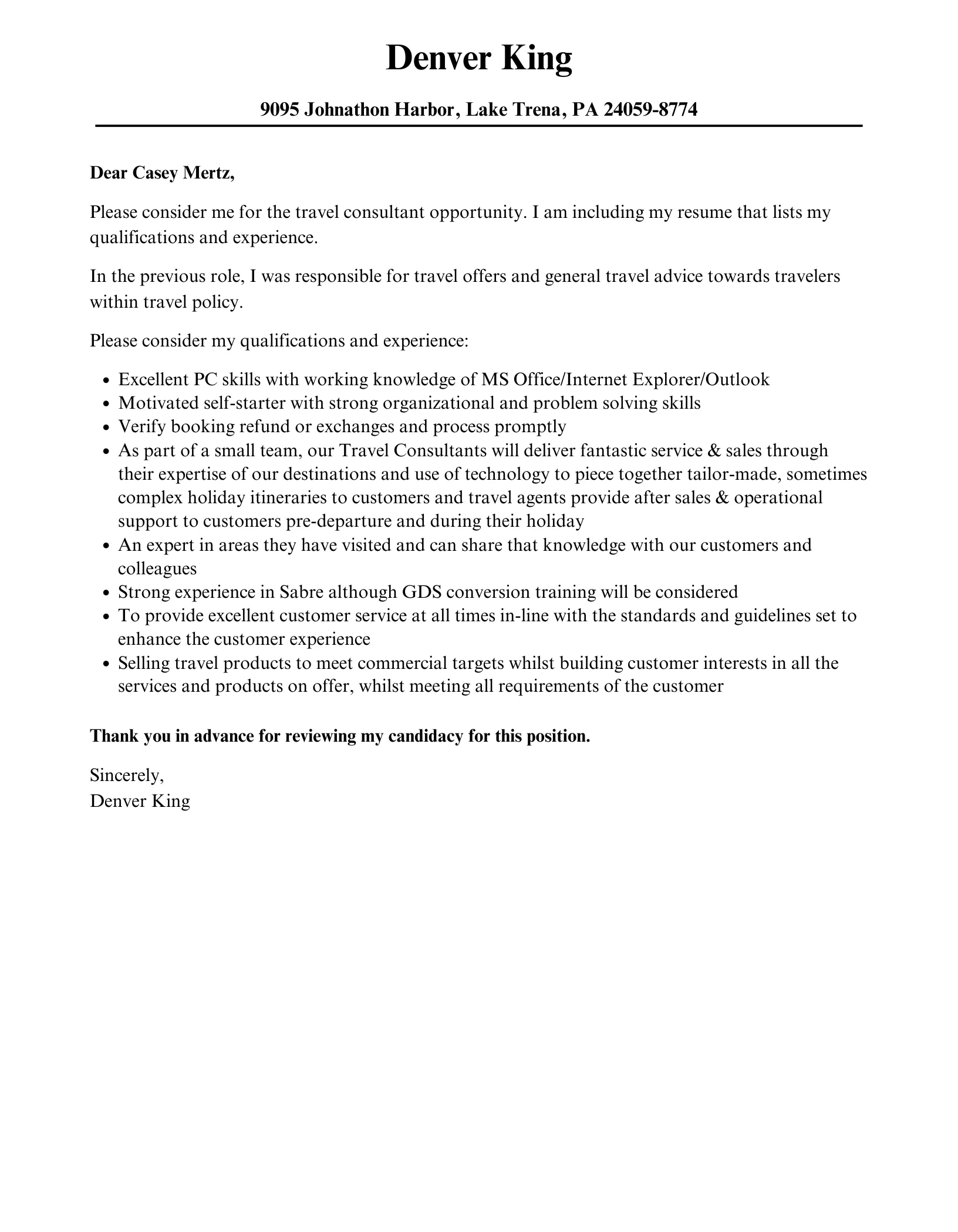
Crafting Your Travel Consultant Cover Letter
Your cover letter is your first opportunity to make a great impression and secure an interview as a travel consultant. It’s a chance to showcase your personality, enthusiasm, and qualifications. The primary goal of the cover letter is to convince the hiring manager that you’re the perfect candidate. A well-crafted cover letter grabs attention, highlights relevant skills and experience, and provides a glimpse into your passion for travel. It should be tailored to each specific job application, clearly explaining why you’re interested in the position and why you would be a valuable asset to their team. Remember, a generic letter won’t cut it. Each cover letter must be unique.
The ideal cover letter should be concise and professional. Maintain a professional tone and utilize proper grammar and spelling. Begin with a compelling opening that captures the reader’s attention. Express your enthusiasm for the role and company. Clearly state the position you’re applying for and where you saw the job posting. Use a conversational and engaging tone. Explain why you are interested in the role and how your skills and experience align with the job requirements. Close with a strong call to action, expressing your eagerness for an interview and providing your contact information. Proofread carefully for any errors before submitting.
Highlighting Your Relevant Experience
When crafting your cover letter, focus on highlighting your relevant experience. This includes any prior roles in the travel industry, customer service, sales, or any other experience that demonstrates your ability to assist clients in planning and booking their trips. Detail the responsibilities you held and the skills you used in previous positions, such as itinerary planning, booking flights and accommodations, managing client relationships, and handling customer inquiries. Be specific and provide examples of how you excelled in these areas. Quantify your achievements whenever possible, such as the number of clients you served, the revenue you generated, or any positive feedback you received. This information helps potential employers understand the value you can bring to their team.
Consider structuring this section using the STAR method (Situation, Task, Action, Result) to provide clear and concise examples. Briefly describe the situation, the task you were given, the actions you took, and the positive results. For example, describe how you handled a challenging client request or how you resolved a customer issue. This will help the hiring manager visualize your abilities and capabilities. Also, explain how your past roles prepared you for the specific travel consultant position you are applying for. By connecting your previous experiences to the job requirements, you demonstrate your suitability and eagerness to contribute to the company’s success. Remember to showcase the skills, knowledge and abilities that align with the key responsibilities of the role, and also emphasize skills which the job description mentions.
Showcasing Your Skills

Your cover letter is an excellent space to display the skills you’ve honed over the years. Travel consultants need a variety of skills to succeed, so make sure to include your relevant expertise. These skills encompass a wide array of competencies, from communication to problem-solving. First, highlight your exceptional communication skills. This includes both written and verbal communication, essential for effectively interacting with clients, colleagues, and vendors. Mention your ability to actively listen to clients’ needs, clearly explain travel options, and provide accurate and helpful information. If you are multilingual, highlight your ability to speak additional languages. This skill can be very valuable, especially if you are looking for roles that work with international clientele. Detail your organizational skills, demonstrating how you can manage multiple tasks and projects, pay close attention to details, and efficiently manage client itineraries and bookings.
Emphasize your proficiency in travel booking software and reservation systems. This shows you can make reservations quickly and efficiently. Mention specific software you’re familiar with. Demonstrate your problem-solving abilities, highlighting your capacity to solve unexpected travel problems. Describe your experience in resolving customer issues and providing solutions. Be sure to mention other important skills that are important in this industry, such as sales and customer service skills. If you have strong sales skills, demonstrate the ways you can increase revenue. Show how your customer service abilities lead to satisfied clients. If you have any specific knowledge of certain destinations or types of travel, include that as well. This can be beneficial and demonstrate your unique knowledge and skills.
Emphasizing Your Passion for Travel
Your passion for travel is a key factor in your cover letter. It’s about more than just a job; it’s about the experience you want to provide others. Express your genuine enthusiasm for travel. Share your own travel experiences and how they have shaped your understanding of the industry. This shows your interest extends beyond a paycheck. Discuss what draws you to the travel industry. Show how you enjoy exploring new cultures, helping people realize their travel dreams, and creating unforgettable experiences. Mention your knowledge of various destinations, regions, and types of travel. Do you specialize in any niche areas such as luxury travel, adventure trips, or family vacations? Show what makes you an expert in your specific area.
Explain how you stay updated on travel trends and industry news. Mention any travel-related certifications or courses you’ve completed. This can showcase your commitment to the field. Mention how your love for traveling will help you create positive customer experiences. Focus on your ability to translate this passion into creating remarkable and unforgettable travel experiences for clients. Show your understanding of the client’s perspective. Emphasize the ways you can use your passion to go above and beyond for customers. Illustrate how your personal enthusiasm for travel will drive you to offer exceptional service and help clients plan memorable trips.
Tailoring Your Cover Letter to the Job
Customizing your cover letter for each job application is critical. It shows your genuine interest in the specific opportunity and the company. Carefully review the job description and identify the key requirements and qualifications the employer is seeking. Use the job description to highlight your skills and experiences that align with the requirements. This tailored approach demonstrates that you’ve done your research. Customize your cover letter by mentioning specific aspects of the company or the role that appeal to you. Show that you understand the company’s mission, values, or the types of travel packages they offer. Do you have special knowledge that fits their clients’ needs? Highlight how your qualifications will bring value to that specific company. Discuss how you can support their goals.
Use the job description as your roadmap, weaving in the keywords and phrases from the posting. This helps your application pass through Applicant Tracking Systems (ATS). Customize your cover letter by mentioning specific aspects of the company or the role that appeal to you. Show that you understand the company’s mission, values, or the types of travel packages they offer. Addressing the hiring manager by name, if possible, is a good way to show the effort you put into the application. It can be found on the job description or the company website. Tailoring your cover letter for each opportunity increases your chances of standing out and making a positive impression on the hiring manager. By customizing your letter, you demonstrate your genuine interest and your commitment to the company.
Quantifying Your Achievements

Quantifying your accomplishments helps your cover letter stand out and make a significant impact. Instead of merely stating your skills, focus on the tangible results you’ve achieved in your previous roles. Use specific numbers and data to demonstrate your value to prospective employers. For example, describe the number of clients you assisted, the percentage increase in sales you generated, or the number of positive reviews you received. If you have previous sales or client-facing experience, show your impact on revenue or customer satisfaction. Showcase how you have provided excellent customer service and made clients happy. Highlight instances where you exceeded expectations. This offers proof of your abilities. Use metrics like these to show your impact.
Quantifying your accomplishments can include the specific number of bookings you handled per month. Use numbers to show the impact you had. If you successfully resolved any customer complaints, or any time you received any positive customer feedback, include this. If you have any specialized knowledge of a travel destination, quantify it with stats. By quantifying your accomplishments, you provide concrete evidence of your skills and accomplishments, making it easier for the hiring manager to see the value you can bring. Concrete examples are much more effective than general statements. This helps the hiring manager understand what to expect and what kind of value you could bring to the organization.
Proofreading and Editing Your Cover Letter
Before submitting your cover letter, proofread and edit it to ensure it is free of errors. Spelling and grammar mistakes can undermine the credibility of your application. Thoroughly review your cover letter for any typos, grammatical errors, and punctuation issues. Pay close attention to sentence structure, word choice, and overall clarity. Read your cover letter aloud to identify awkward phrasing or unclear sentences. It may be easier to find mistakes this way. Have a friend, family member, or career counselor review your cover letter for feedback. Another pair of eyes can catch errors you may have missed. This could be a coworker or someone with experience in the industry.
Ensure that your cover letter is clear, concise, and easy to read. Use proper formatting, including consistent font size, margins, and spacing. Keep your cover letter to one page, as hiring managers appreciate concise, informative documents. By taking the time to proofread and edit your cover letter, you will convey a professional image and show attention to detail. This will demonstrate your commitment to quality and increase your chances of making a positive impression on the hiring manager. Proper formatting and eliminating errors can make a huge difference.