Understanding the UCSC Cover Letter Purpose
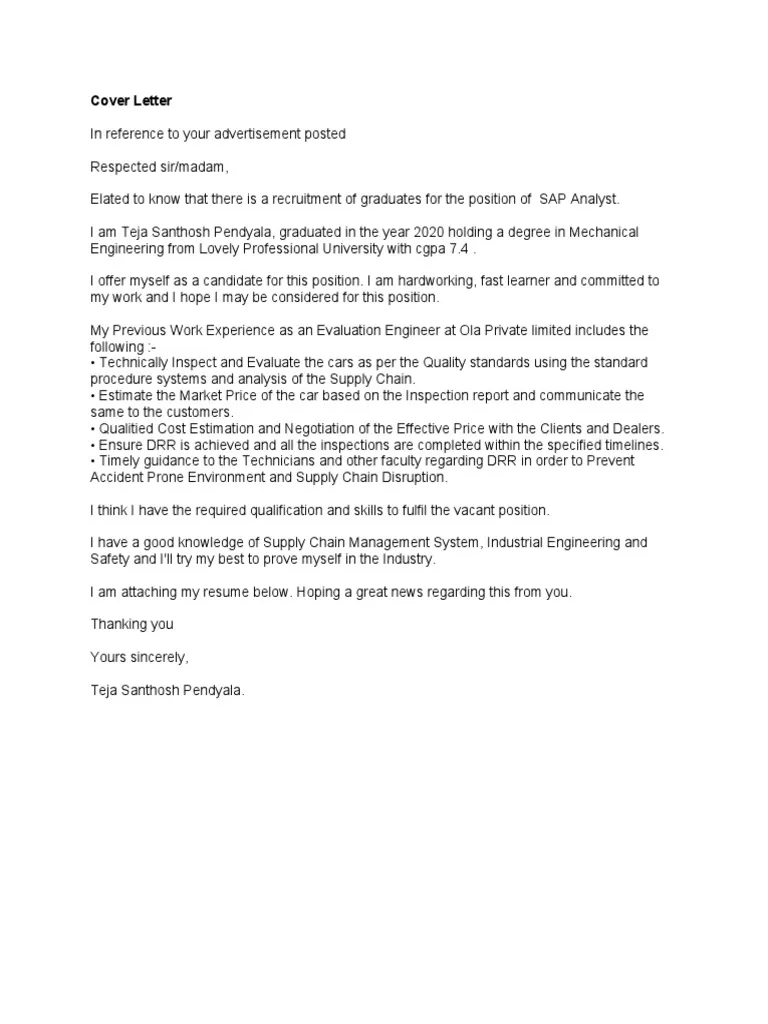
A UCSC cover letter is more than just a formality; it’s your initial introduction and a crucial opportunity to make a strong impression. It serves as a supplement to your resume, providing a narrative that connects your skills, experiences, and aspirations with the specific requirements of the job. The goal is to convince the hiring manager that you are a suitable candidate, showcasing not just your qualifications but also your personality, passion, and genuine interest in UCSC. The cover letter allows you to elaborate on your experiences and explain how they align with the role, while also demonstrating your communication skills and attention to detail, aspects that a resume alone cannot fully convey. Understanding the purpose is the first step to creating an impactful letter.
Why a Cover Letter Matters for UCSC
For UCSC, a well-crafted cover letter is essential because it offers a personalized touch that generic applications lack. UCSC, like many universities, values candidates who are dedicated, enthusiastic, and have a clear understanding of their mission. A cover letter allows you to express why you are particularly drawn to the university, its values, or its specific departments. This personalized approach helps you stand out from a pool of applicants. A strong cover letter also demonstrates your communication skills, which are highly valued in an academic environment. It shows you can articulate your thoughts clearly and concisely, a crucial skill for any professional role at UCSC. It provides context to your experiences, allowing the recruiter to understand your career trajectory.
Highlighting Your Skills and Experience

The cover letter is where you translate your skills and experiences into a compelling narrative. It is important to highlight the most relevant aspects of your background, emphasizing accomplishments and quantifying them whenever possible. Instead of simply listing your duties, focus on how your actions benefited your previous employers or projects. For example, if you’re applying for a research position, highlight your experience with specific research methodologies or your contributions to published papers. Use action verbs to start your sentences. Did you ’lead’ a project or ‘managed’ a team? What are your key technical skills and how do they align to the roles at UCSC? Explain why those experiences make you a great fit for the specific role. Be specific and always back up your claims with examples, making your claims as evidence-based as possible.
Tailoring Your Cover Letter
A generic cover letter will likely end up in the digital trash folder. To make an impact, you must tailor your cover letter to the specific role and the institution. This means researching UCSC thoroughly and understanding the needs of the department or hiring manager. Tailoring shows initiative and genuine interest. Customization demonstrates that you’ve taken the time to learn about the position, the team, and the university’s goals. It shows you aren’t just applying for any job; you are applying for this specific role at UCSC. This involves reviewing the job description carefully, identifying the key skills and experiences the employer seeks, and then aligning your qualifications accordingly. Referencing specific projects, research areas, or faculty members can also demonstrate your knowledge of the university and the role.
Researching UCSC and the Role
Before you start writing, dedicate time to researching both the role and the university. Visit the UCSC website, explore the department’s web pages, and read about current projects, research, or initiatives. Understand the university’s mission, values, and recent achievements. For the role, carefully review the job description, noting key requirements and desired skills. If possible, identify the hiring manager or the team you might be working with. Knowing their background and interests can help you tailor your letter even further. This research not only informs your cover letter but also helps you determine if the role and the university are a good fit for your career goals.
Customizing Content for Each Application

Every cover letter should be a unique document. Avoid using a template without making significant changes. Each application deserves a personalized touch. Customize your content by adjusting your tone, highlighting relevant skills, and addressing specific needs mentioned in the job description. For example, if the job description emphasizes collaboration, provide examples of your teamwork skills. If the role involves a specific software or methodology, ensure you mention your experience with it. This level of customization demonstrates your commitment to the role and UCSC. When you have a clear understanding of the role, show how your skills and experiences fit that role. Be sure to change all specific keywords and ensure you are not using the same information for all the jobs.
Key Components of a UCSC Cover Letter
A well-structured cover letter includes several key components that work together to present you as a compelling candidate. The following sections, each playing a crucial role in your application, should be included.
Contact Information and Salutation
Start with your contact information (name, address, phone number, email) at the top, followed by the date. Then, address the letter to the hiring manager if possible, otherwise, use a professional salutation such as ‘Dear Hiring Committee’. If you know the hiring manager’s name, address them personally (e.g., ‘Dear Mr./Ms. [Last Name]’). This shows you’ve put effort into the application and demonstrates attention to detail. Ensure that the information is accurate and up-to-date. Double-check the spelling of the recipient’s name and title. A simple mistake can create a negative first impression. Be careful with the email you use, ensuring that it’s a professional-sounding email address.
Opening Paragraph Crafting

The opening paragraph is your first chance to grab the reader’s attention. State the position you are applying for and where you found the job listing. Briefly mention why you are interested in the role and UCSC. If you have a connection to UCSC, such as an alumnus status or knowledge of the university, mention it here. Be enthusiastic and make it clear why you’re interested in the specific role. Do not start with a generic phrase like ‘I am writing to express my interest…’ Instead, open with an engaging statement that shows your understanding of the role and the university’s mission. Keep it concise and focused, setting the stage for the rest of your letter.
Body Paragraphs Highlighting Achievements
The body paragraphs are where you provide detailed examples of your skills and experience. Use 2-3 paragraphs to explain how your qualifications align with the job requirements. Focus on achievements, using the STAR method (Situation, Task, Action, Result) to describe your experiences. Quantify your results whenever possible. Instead of saying ‘I improved customer satisfaction,’ say ‘I increased customer satisfaction by 15% through implementing a new training program.’ This shows that you’re not only good at your job, but the success metrics of your efforts. Emphasize accomplishments that are most relevant to the role. The recruiter does not want to read your entire CV, they want to see your best accomplishments.
Closing Your Letter Professionally
Conclude your cover letter with a professional closing statement. Reiterate your interest in the position and UCSC. Summarize your key qualifications and express your enthusiasm for the opportunity. Include a call to action, such as ‘I am eager to discuss how my skills can benefit your team’ or ‘Thank you for your time and consideration. I look forward to hearing from you.’ End with a formal closing (e.g., ‘Sincerely’ or ‘Best regards’) and your full name. Proofread the closing for any grammatical errors, and confirm your contact information is accurate, so the recruiter can reach you.
Proofreading and Formatting

Proofreading and formatting are critical to making a positive impression. A well-written cover letter with no errors shows attention to detail and professionalism. It’s a reflection of your commitment to the role. A letter with errors can instantly disqualify you. Take the time to check every aspect of your cover letter.
Checking for Grammar and Spelling
Carefully proofread your cover letter for any grammatical errors or spelling mistakes. Use a spell checker, but also read the letter aloud. Sometimes, errors are easier to catch when you read your work out loud. Ask a friend, family member, or career counselor to review your letter as well. A second set of eyes can often catch errors you might miss. Ensure your sentences flow well and that your ideas are expressed clearly. Don’t over-rely on the spellchecker, as it may not catch all errors. Poor grammar and typos can make a negative impression.
Ensuring a Professional Appearance
Ensure your cover letter has a professional and clean appearance. Use a standard font like Times New Roman, Arial, or Calibri with a font size of 11 or 12 points. Use single spacing within paragraphs and double spacing between paragraphs. Align the text to the left and use a simple, easy-to-read format. Avoid using too much bolding, italics, or underlining. Keep the margins at 1 inch on all sides. The layout should be balanced, and the information should be easy to follow. A well-formatted cover letter shows that you are organized and care about presenting your best self. Ensure it is no longer than one page.
Submitting Your Cover Letter

Follow the submission guidelines carefully to ensure your application is correctly received. Paying attention to the details can help you avoid any unnecessary errors.
File Format and Submission Guidelines
Always follow the specific instructions provided in the job posting. Unless specified otherwise, save your cover letter as a PDF file. A PDF ensures your formatting remains consistent across different devices and operating systems. Name the file appropriately (e.g., ‘YourName_CoverLetter_JobTitle’). Make sure to include both your cover letter and resume. If the application requires both, submit them together. Ensure your attachments are not too large. Double-check the submission instructions to confirm that all required documents are attached. Always test the file before submitting to make sure everything is correct.
Following Up on Your Application
After submitting your application, consider following up, but be mindful of the timing. Wait at least one week but no more than two weeks before sending a polite follow-up email. In your email, express your continued interest in the position and reiterate your qualifications. Reference the job title and the date you applied. Keep the email brief and professional. Thank the hiring manager for their time and consideration, and reaffirm your enthusiasm for the opportunity. Follow up is a great way to express your interest, but don’t overdo it; a few follow-ups are fine but not more than two. Ensure you address the appropriate person in your follow-up email.